


RETURNING TO THE SACRED SANCTUARY FOR VU LAN: THE ESSENCE OF FILIAL PIETY THROUGH THE LENS OF TRUC LAM ZEN
Vu Lan More Than a Festival, It's a Philosophy
The Vu Lan Festival originates from the legend of the highly filial Bodhisattva Maudgalyayana (Muc Kien Lien) who saved his mother from the hungry ghost realm. Since Buddhism was introduced to Vietnam, the Vu Lan festival on the 15th day of the seventh lunar month has become a tradition of filial piety and gratitude, aligning with the sacred ancestor worship beliefs of the Vietnamese people.
What is special about Vu Lan in Vietnamese culture is: it does not stop at the story of a son saving his mother. Vu Lan of filial piety has become a "cultural festival of human love," guiding each person back to their national roots, to the moral principle of "When drinking water, remember its source" with their ancestors, reminding everyone to cherish what they have and the duty of a child to always remember the gratitude for their parents' birth and upbringing.
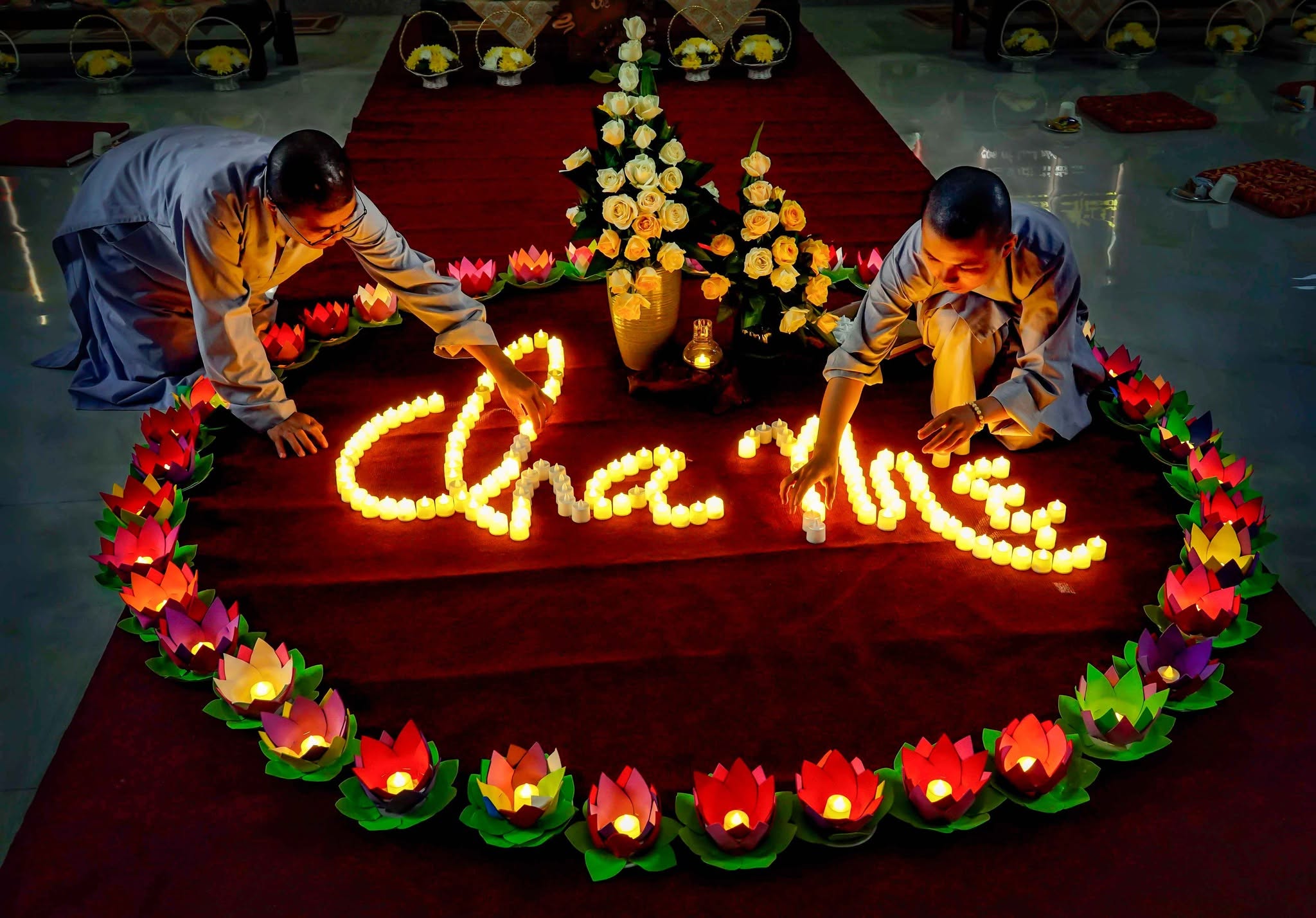
In the Announcement of the Vu Lan Filial Piety Festival for Buddhist Calendar 2569, the Vietnam Buddhist Sangha stated: "The Vu Lan festival of Buddhism has long been intertwined with the philosophy, traditional culture of filial piety, and the nation's principle of remembering the source when drinking water, as well as the custom of worshiping on the full moon day of the seventh lunar month forming the Vu Lan Filial Piety festival season."
But there is a depth in the word "filial piety" (hiếu) that few people delve into a depth that the Vietnamese Truc Lam Zen Sect defined more than seven centuries ago.
Filial Piety in the Truc Lam Zen Sect is Broader Than We Think
The Truc Lam Zen Sect is not a meditation lineage detached from life. Since its founding by Buddhist Emperor Tran Nhan Tong, the core spirit of this lineage has been engaged Buddhism bringing religion into life, living mindfully right in the most ordinary moments.
And within that engaged spirit, the word filial piety is understood on three levels:
Level 1: Filial piety toward the parents who gave us birth
This is the closest and also the foundational level. According to Venerable Thich Nhat Tu, the Vu Lan Festival calls for social awareness of the spirit of repaying gratitude encouraging people to appreciate and repay four sources: parents, teachers, the country, and all sentient beings.
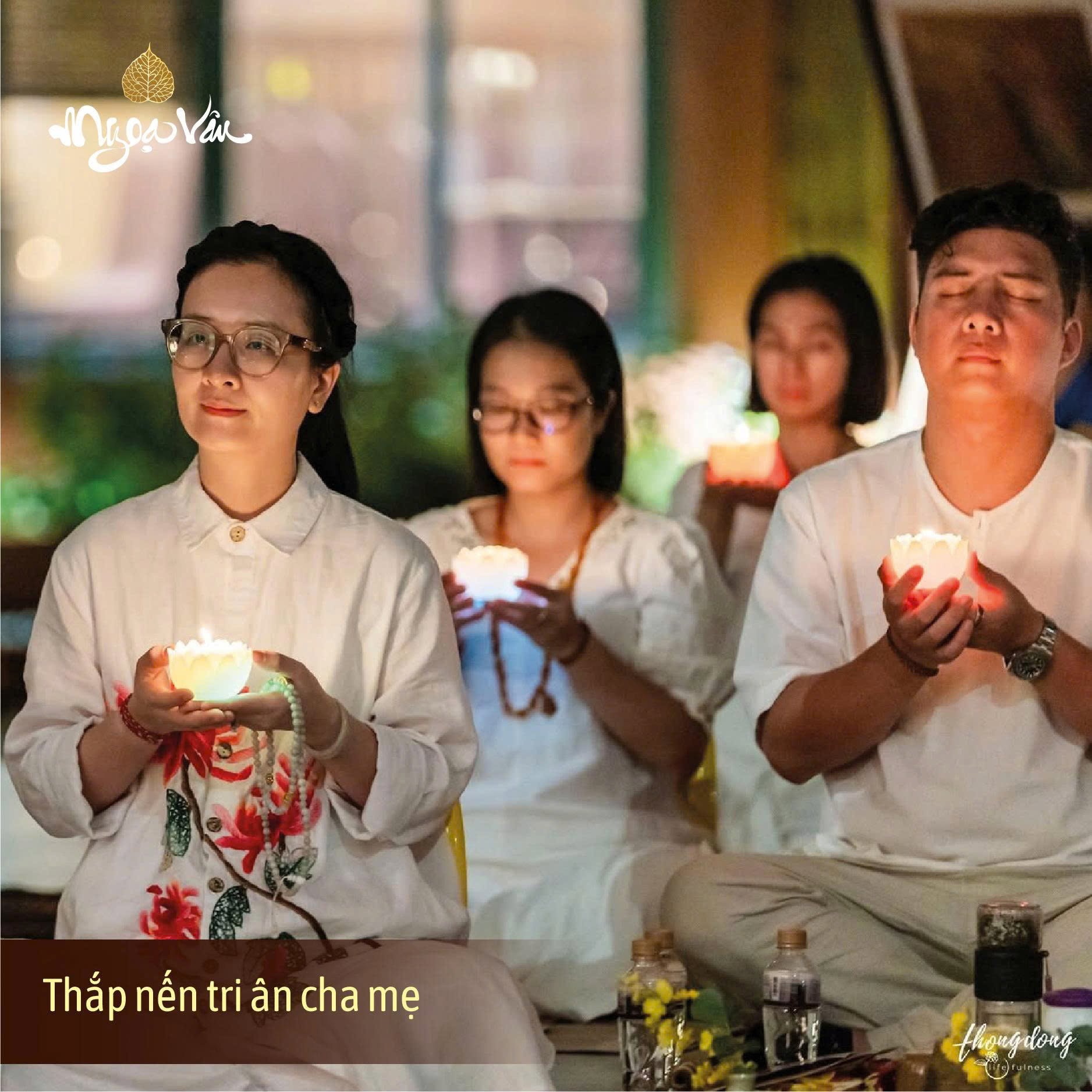
The Truc Lam Zen Sect does not separate filial piety from daily life. Filial piety is not just offering incense on Vu Lan day, but living mindfully every day: knowing that one still has parents, knowing how to cherish that before it's too late, and transforming gratitude into concrete actions in every moment.
Level 2: Filial piety toward ancestors the spiritual roots of the lineage
This is the depth that the Truc Lam Zen Sect adds to the filial piety of Vietnamese Buddhism: filial piety toward the nation's spiritual roots ancestors are not only grandparents and parents in the family, but also those who wove the cultural and spiritual identity of the Vietnamese nation.
The Vu Lan filial piety festival is no longer a ritual confined to monasteries but has become a common festival for all souls looking toward their sacred and noble roots, the closest being the image of parents. The Vu Lan filial piety festival is a broad community cultural activity, contributing to the preservation, inheritance, and promotion of the national cultural identity.
Level 3: Filial piety toward oneself taking care of one's own soul
This is a level rarely mentioned but is the most distinctive ideology of the Truc Lam Zen Sect.
In the Nom poem Ode to Living in the World, Joyful in the Way (Cu Tran Lac Dao), Buddhist Emperor Tran Nhan Tong taught: "Pure Land is a pure heart, doubt no more and ask not of the Western Paradise, Amitabha is a tranquil and reflecting nature, labor not to seek the Ultimate Bliss." The doctrine of Truc Lam is to stop afflictions first "Once the mind is free, no other dharma is needed."
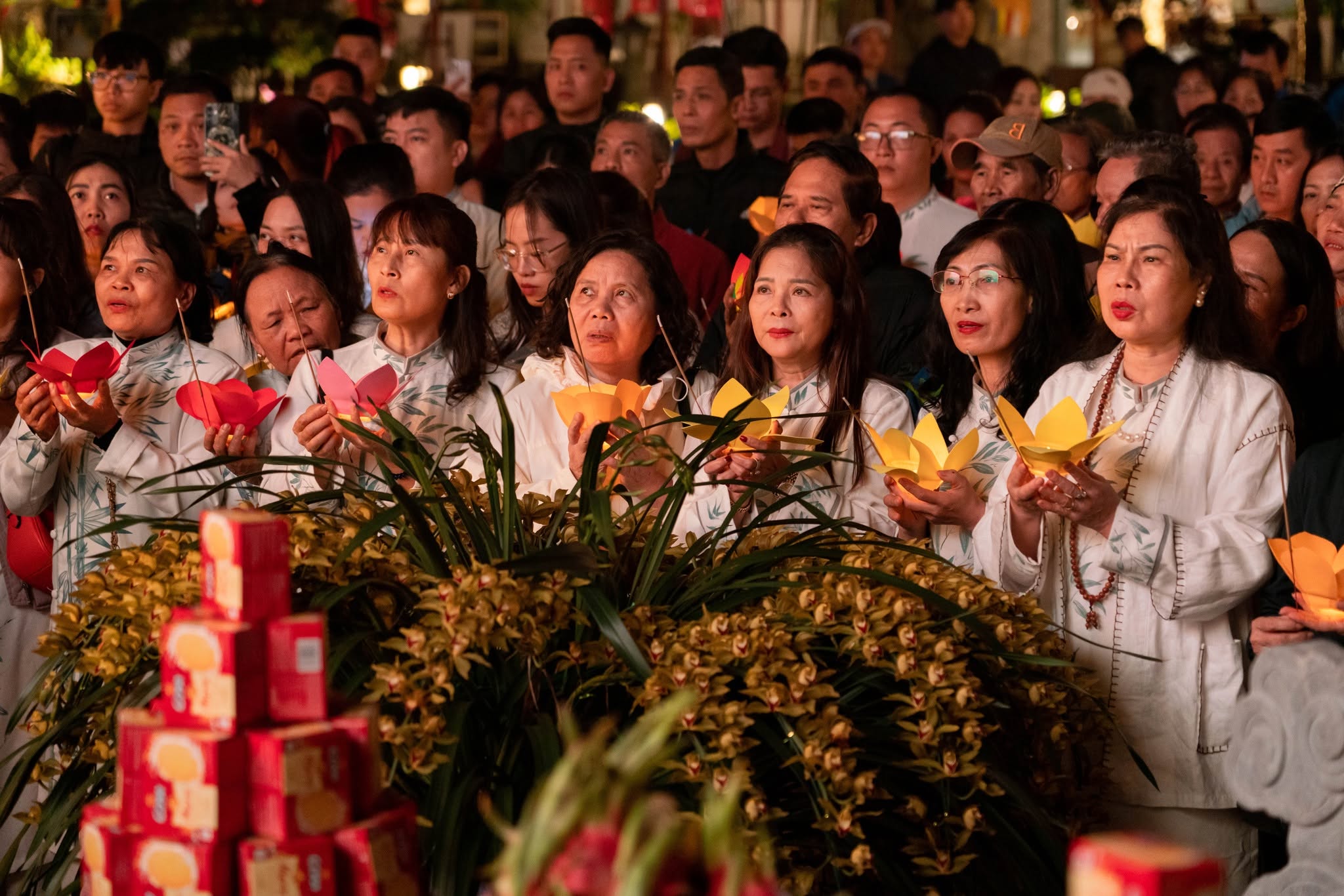
In other words: the Buddha realm is not far away it is right in one's mind when the mind is purified. And a person who takes care of their soul living virtuously, living mindfully, not letting afflictions obscure their inherent light is also practicing the deepest form of filial piety: because every parent wishes their children to live a truly peaceful and happy life.
Buddhist Emperor Tran Nhan Tong An Example of Filial Piety in His Own Way
There is a beautiful paradox in the journey of Buddhist Emperor Tran Nhan Tong that people often overlook: He left his parents and the throne to ascend the mountain and that was His deepest way of showing filial piety to the entire nation.
At exactly 20 years old, Crown Prince Kham was passed the throne by King Tran Thanh Tong, proclaiming himself Emperor, with the title Hieu Hoang the king who put Filial Piety (Hieu) first. He studied the Way with Tue Trung Thuong Si and realized the truth: "Reflecting upon oneself is one's own duty, it cannot be obtained from others" observing oneself is a duty that cannot be done by anyone else.
After fulfilling his responsibility to the country reigning for 15 years, leading two victorious resistance wars Tran Nhan Tong became a monk, ascended Yen Tu mountain to practice asceticism, founded the Truc Lam Zen Sect, and wandered everywhere, destroying shrines of evil spirits and lewd deities, teaching the people to practice the ten wholesome deeds.
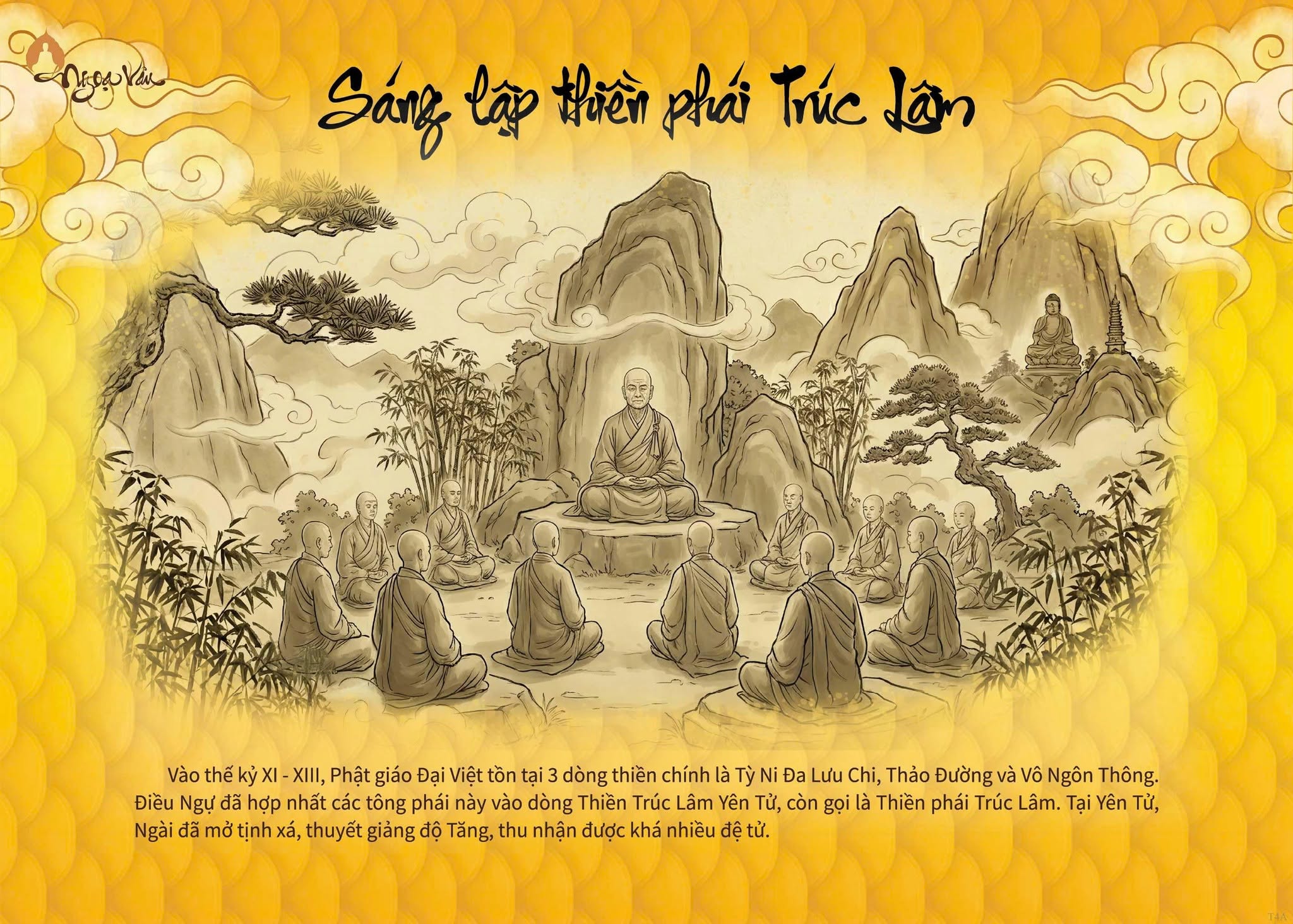
He did not abandon his responsibility He fulfilled it, and then began another mission: building the spiritual foundation the cultural soul for the Vietnamese nation. That is filial piety toward ancestors and the country in the broadest sense.
And that very journey led Him to Ngoa Van Hermitage the most sacred sanctuary of the Truc Lam Zen Sect.
Ngoa Van The Sanctuary of Truc Lam's Filial Piety
In May 1307, Buddhist Emperor Tran Nhan Tong returned to Bao Dai mountain now in Dong Trieu City, Quang Ninh province to establish Ngoa Van Hermitage for ascetic practice in his final days. On the 1st day of the 11th month in 1308, He entered Nirvana right here. His disciples performed the cremation ceremony, collected the sarira, and built the Buddhist Emperor Stupa to preserve them at Ngoa Van which became the most sacred sanctuary of the Truc Lam Zen Sect.
During the Vu Lan filial piety season in 2025, hundreds of Buddhists from all over the country gathered at Ngoa Van Hermitage and Pagoda, making a pilgrimage to venerate the sarira of Buddhist Emperor Tran Nhan Tong at the Special National Historical Relic Site.
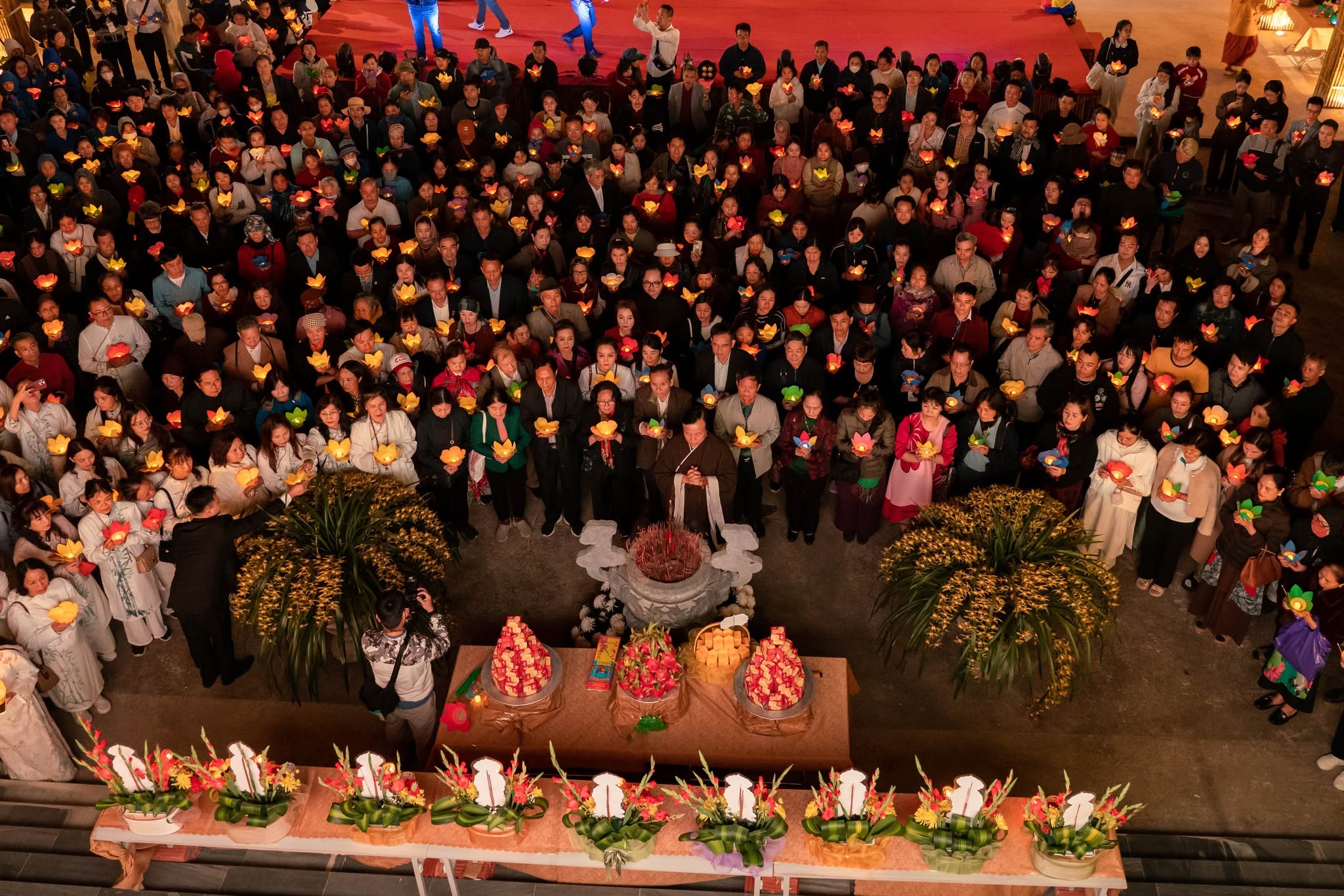
This is no coincidence. Returning to Ngoa Van during the Vu Lan season is an act of "three-level filial piety" according to the Truc Lam spirit:
Filial piety toward parents: Vowing to go on a pilgrimage, generating merit to dedicate to living and deceased parents this is how the Ullambana Sutra teaches: only by combining the power of the monks from the ten directions and the blessings from sincere practice can parents be helped to escape karmic retribution.
Filial piety toward spiritual ancestors: Venerating Buddhist Emperor Tran Nhan Tong the patriarch who built the foundation of national Buddhism. According to Venerable Thich Dao Hien: "Returning to Ngoa Van is returning to history. Venerating and bowing at the sacred relics where a Buddha attained enlightenment and Buddhahood will bring immeasurable, boundless merit."
Filial piety toward oneself: Amidst the cloud-covered space of Ngoa Van Hermitage, amidst the ringing of the temple bell on Bao Dai mountain pilgrims have the opportunity to stop, listen to their inner selves, and practice what the Buddhist Emperor called "reflecting upon oneself": looking back at oneself.
"Following the Buddhist Emperor's Footsteps" The Vu Lan Season at Ngoa Van
The journey back to Ngoa Van during the Vu Lan season is not just a simple spiritual trip it is a multi-layered experience where every moment has its own meaning of filial piety.
Venerating the Buddhist Emperor Stupa Touching the Sarira of the Patriarch
The Buddhist Emperor Stupa at Ngoa Van Hermitage preserves a portion of Tran Nhan Tong's sarira after the cremation ceremony over 700 years ago confirmed by archaeologists after more than 10 years of research. This is one of the most precious Buddhist relics of Vietnam that still exists today.
Standing before the Buddhist Emperor Stupa during the Vu Lan season offering incense and bowing is not just a ritual. This is a moment of connection between the present and over 700 years of history, between a child showing filial piety and the patriarch who taught that filial piety is the path to liberation.
Meditating in Ngoa Van Hermitage Where the Buddhist Emperor Entered Nirvana
Ngoa Van Hermitage where the bronze statue of the Buddhist Emperor in Nirvana posture is placed, covered in clouds all year round like a veil between the secular world and the pure realm is a special meditation place during the Vu Lan season.
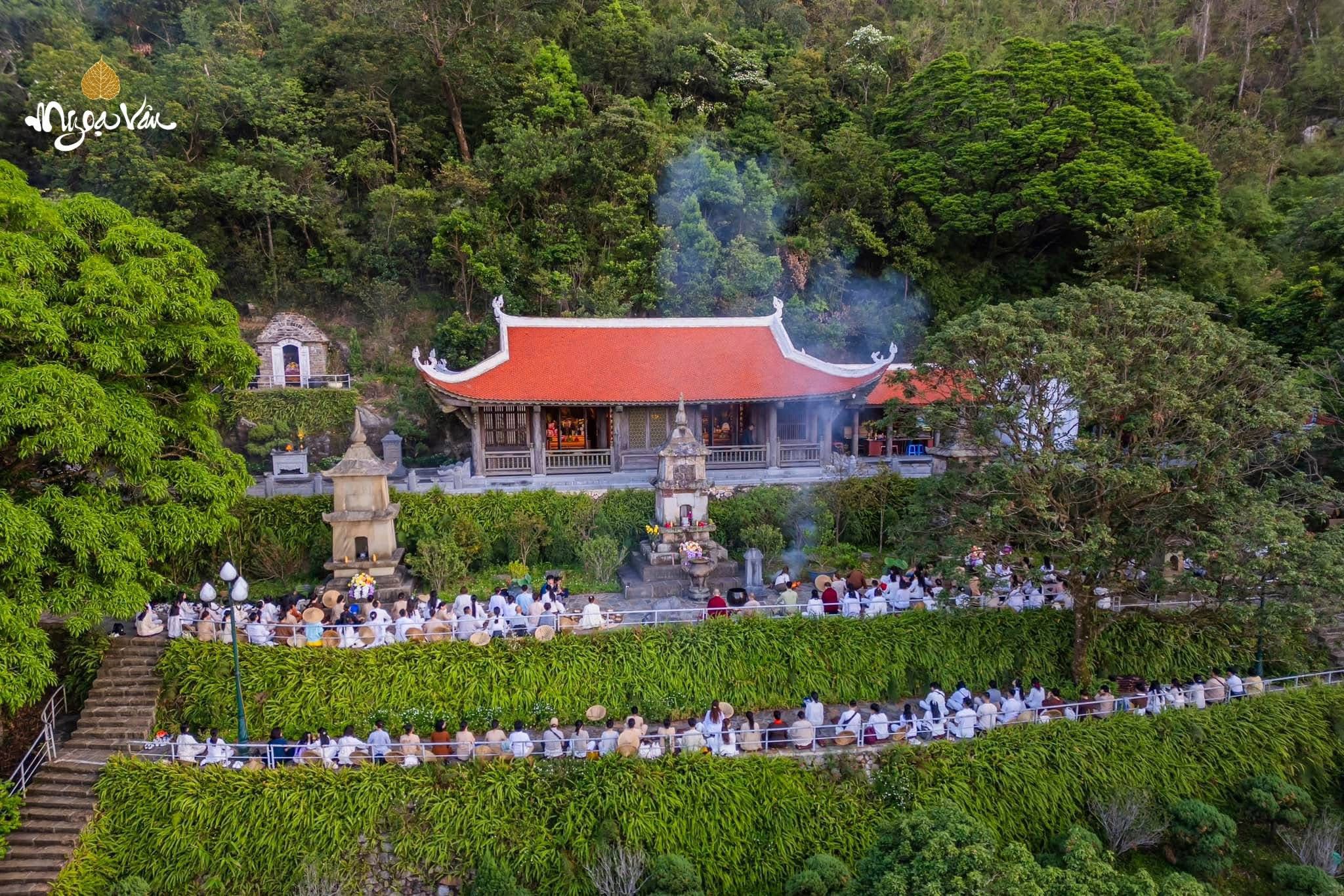
Meditating here, carrying the image of parents and ancestors in your heart so that every breath is not just your own breath but a breath of gratitude. This is Truc Lam meditation in its most original sense.
Gratitude Tea Meditation A Filial Piety Ritual Through Silence
The Truc Lam Zen Hall of Ngoa Van Zen Village organizes tea meditation as a special ritual for the Vu Lan season not noisy, not ostentatious, just warm cups of tea in silence and gratitude.
Tea meditation during the Vu Lan season at Ngoa Van carries an additional layer of meaning: while sipping tea, you can remember the times your parents poured tea for you, the family meals, the simple things that now sometimes have become a luxury. That is meditation not empty meditation, but gratitude meditation.
Vegetarian Cuisine During the Vu Lan Season Nourishing Blessings
During the Vu Lan season, followers of the Buddhist tradition often eat vegetarian food to accumulate merit and dedicate it to their parents. Ngoa Van Kitchen with pure Vietnamese vegan and macrobiotic cuisine becomes an ideal space to practice this not because of rules, but because every simple meal is a reminder: our parents raised us with the simplest and most genuine things.
Things You Can Do This Vu Lan Season at Ngoa Van
If you have never returned to Ngoa Van this is the most meaningful season to start.
Pilgrimage to venerate the Buddhist Emperor's sarira: Bring sincerity, an incense stick, and your parents' names in your heart.

Morning meditation at Ngoa Van Hermitage: Sit in meditation in the morning mist, let your mind settle down and gratitude be allowed to rise naturally not because anyone forces you, but because you truly feel it.
Write a letter to your parents in the Zen Hall: Some pilgrims at Ngoa Van have done this simple thing sitting in the Truc Lam Zen Hall, writing down things they could never say to their parents. No need to send it. Just write it down, and read it again alone.
Eat a vegetarian meal mindfully: Think about the person who cooked meals for you. Remember the smell of your home kitchen. Eat slowly. Be grateful.
Sit by the stream and do nothing: This is also filial piety because every parent wishes their child to be healthy, peaceful, and not exhausted by life. And sometimes the best way to show parents we are okay is to truly be okay not okay in the sense of meeting deadlines, but okay in the sense of a peaceful mind.
Conclusion: Returning to the Sanctuary is Returning to Oneself
The Vu Lan season reminds us: we are standing on the shoulders of many generations.
Our parents raised us, our ancestors built the country, and Buddhist Emperor Tran Nhan Tong left behind the Truc Lam spirit teaching that filial piety is not just a ritual, but a way of life; not just one day a year, but every moment we choose to live mindfully and with gratitude.
Returning to Ngoa Van during the Vu Lan season is returning to the Sanctuary a place that for over 700 years has become the destination where Vietnamese people return to remember the most important things.
"Living in the world, joyful in the Way, let things take their natural course.
When hungry, eat; when tired, sleep.
The treasure is already in the house, stop searching outside.
Facing the world with an unattached mind, ask not about Zen."
Buddhist Emperor Tran Nhan Tong
Filial piety is not to be found far away; it is right here in your heart, in this breath, in the decision to call home tonight, and in the journey back to the Sanctuary that you are thinking about.

 Ngày
31/07/2026
Ngày
31/07/2026


