


A HOLISTIC AWAKENING IN NATURE: HARMONIZING MINDFUL WALKING WITH THE ZEN TEA EXPERIENCE
What is Life Cultivation (Duong Sinh) and Why is it Coming Back?
Wellness meditation (thiền dưỡng sinh) is a practice that combines life cultivation (duong sinh) and meditation, improving both physical and mental health, stimulating the elimination of aging cells from the body, and is suitable for everyone.
Life cultivation is not a new concept. In traditional Eastern medicine, life cultivation is the art of nourishing life not just curing diseases when sick, but proactively maintaining health and vitality every day, through diet, breathing, exercise, and mindset.
Interestingly, in recent years, modern scientific studies have continuously confirmed what the ancients knew: practicing mindfulness meditation the foundation of life cultivation helps relax the body and mind, increases concentration, boosts the immune system, enhances emotional control, and improves the quality of life.
And specifically, the ancient Zen practice originating from the Tran dynasty the era of Buddhist Emperor Tran Nhan Tong and the Truc Lam Zen Sect is being inherited and developed into a life cultivation method suitable for today's society.
This is no coincidence. Over 700 years ago, the Truc Lam Zen Sect laid the foundation for a philosophy of life that today we call life cultivation: living mindfully, in harmony with nature, nourishing both body and mind in every moment.
Part 1: Mindful Walking When Every Step is a Breath
What is Mindful Walking?
Mindfulness is the ability to be fully aware of the present moment, rather than dwelling in the past or anticipating the future when we are conscious of where we are and what we are doing, with a non-judgmental attitude, not overreacting to what is happening around us.
Mindful walking or walking meditation in the Buddhist tradition involves bringing complete attention to the act of walking: each step touching the ground, the body weight shifting from one foot to the other, the breath coordinated with the pace, the feeling of the wind on the skin, the surrounding sounds.

It is not walking for exercise. It is not walking with a destination in mind. It is walking just to walk each step is a complete action in itself.
The Science Behind Every Mindful Step
A study by the University of Arizona, published in the journal Mindfulness in 2020, showed that a group practicing mindful walking for 6 weeks significantly reduced anxiety symptoms, improved sleep, and emotional regulation. Dr. Michael Amster, a chronic pain specialist, stated: "Running in a mindful state helps the brain disconnect from the anxiety loop."
A 2019 study in Thailand on 58 older women showed that walking meditation encourages better balance through awareness of leg movements coordinated with the ankles when walking slowly. Practicing mindfulness during physical activity can also stimulate creativity and enhance problem-solving skills.
Neuroimaging studies using fMRI and MRI have shown that regular mindfulness practice is associated with increased gray matter density in brain regions related to emotional and cognitive regulation. A meta-analysis published in NCBI in 2013 showed that MBSR significantly improves anxiety and stress symptoms.
When Mindful Walking Combines with Forest Bathing The Doubled Effect
Shinrin-yoku (forest bathing), developed by the Japanese in the 1980s, is a way of slowly walking through the woods, using all senses to connect with nature: seeing the green of the leaves, hearing the wind through the branches, smelling the scent of wood, and touching the tree bark. After just 20-30 minutes in the forest, cortisol levels the stress hormone decrease significantly.
According to a 2007 study by Dr. Qing Li at Tokyo Medical University, exposure to phytoncides natural compounds emitted by trees can increase the number of NK (Natural Killer) cells, helping the body fight against viruses and cancer cells. A study at Chiba University, Japan showed that just 30 minutes of walking in the forest can lower blood pressure and enhance cardiovascular function.
Forest bathing is scientifically proven to: boost the immune system (increase the number and activity of NK cells; increase anti-cancer proteins); reduce anxiety, depression, and anger; relieve stress (lower cortisol and adrenaline levels; suppress the sympathetic nervous system, promote the parasympathetic nervous system; lower blood pressure); and improve sleep.
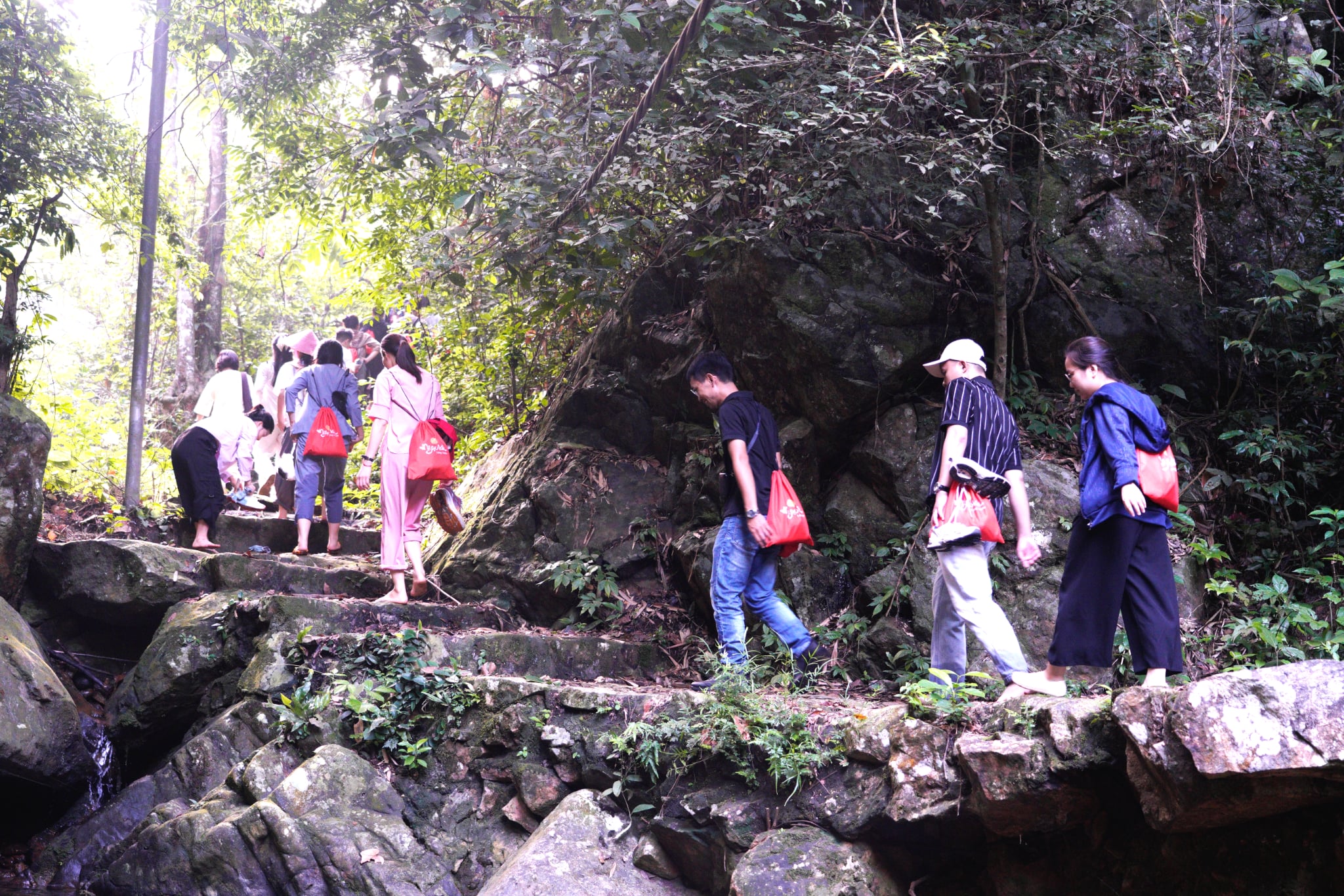
When mindful walking is combined with forest bathing meaning practicing complete attention while walking in a natural forest the two effects resonate with each other: the mind is focused and quieted, while the body absorbs phytoncides and fresh air. This is the most complete life cultivation practice without needing any equipment or medication.
Part 2: The Way of Tea The Ritual of Tranquility and Life Cultivation
Tea is Not Just a Beverage
Green tea contains theanine a compound that helps regulate the body's stress hormone levels, enhances mood, and promotes better relaxation. The caffeine in green tea, combined with theanine, allows stimulating neurotransmitters like dopamine to work more actively, leading to improved memory, mood, and mental state without causing the jitters associated with coffee.
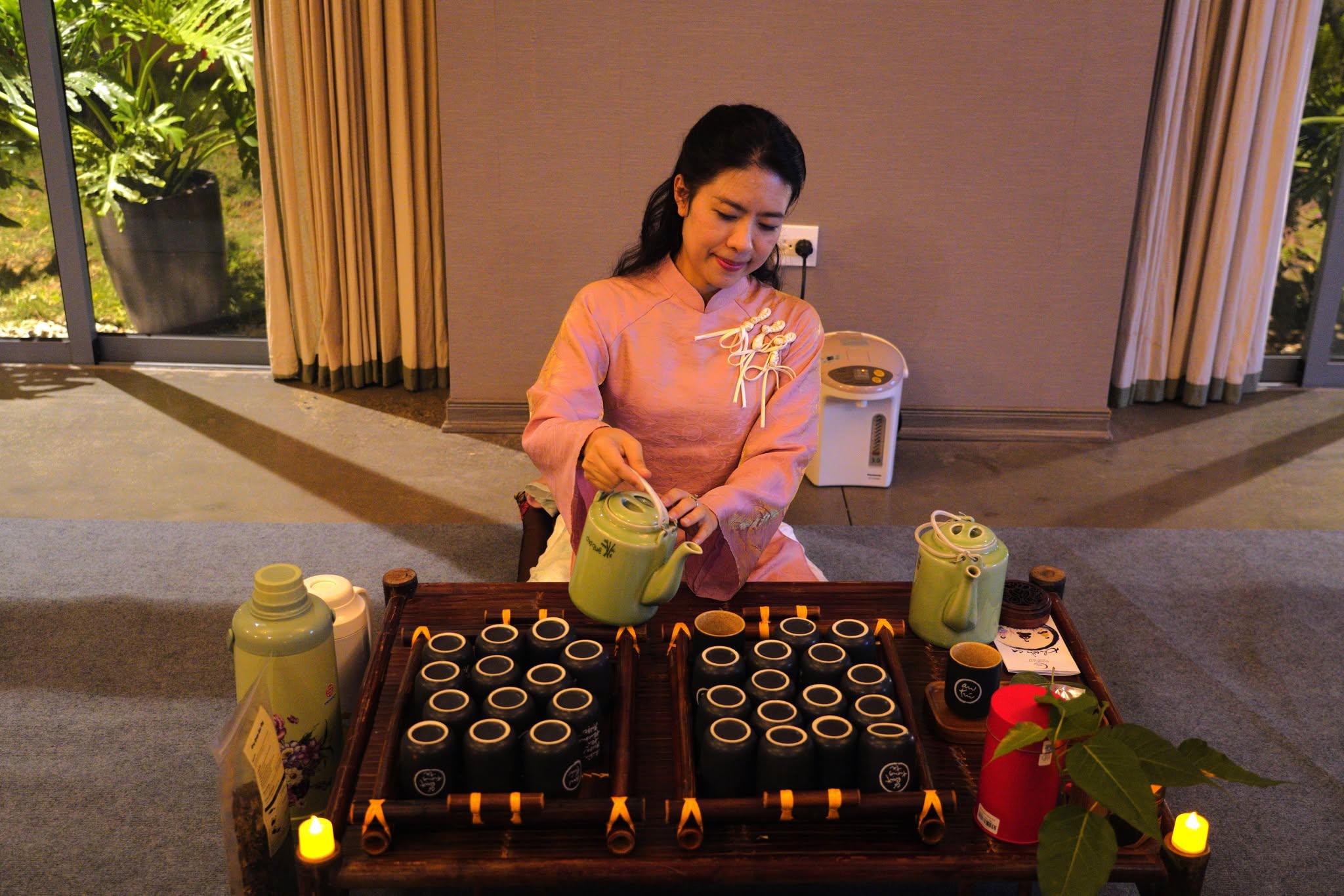
Studies show that meditation combined with tea can help lower blood pressure, improve the immune system, and enhance concentration. Integrating meditation and tea not only brings spiritual benefits but also has a positive impact on physical health.
But the benefits of the Way of Tea do not only come from the chemical components in the tea. They come from the entire ritual the way to brew tea, the way to raise the cup, the way to drink in silence and mindfulness.
The Way of Tea as a Life Cultivation Practice
In the Truc Lam Zen Sect tradition of Buddhist Emperor Tran Nhan Tong, tea and Zen have been intertwined for over 700 years. Tea meditation sessions are not ostentatious rituals they are a daily life cultivation practice: using the simplest action (drinking tea) to train complete presence.
Specifically, a true tea ceremony session cultivates the following life cultivation skills:
Conscious breathing: When sitting in front of a teapot, you naturally breathe slower and deeper this is not by chance but a physiological response when the body receives the "safe and unhurried" signal.
Regulating temperature and sensation: Feeling the warmth of the teacup through the palms is a form of gentle sensory receptor stimulation that has an effect similar to tactile therapy, helping to stabilize the nervous system.
Cultivating patience and letting go: Waiting for the tea to steep for the right amount of time, without rushing this is a practical exercise in staying in the present instead of constantly running forward.
Part 3: When Two Practices Meet A Complete Morning of Life Cultivation
The special thing about combining mindful walking and tea meditation is that they naturally complement each other and create a complete circle of life cultivation:
Mindful walking: awakens the body blood circulation is activated, breathing deepens, muscles are warmed up, and the mind begins to escape the loop of thoughts thanks to attention placed on movement and specific sensations.
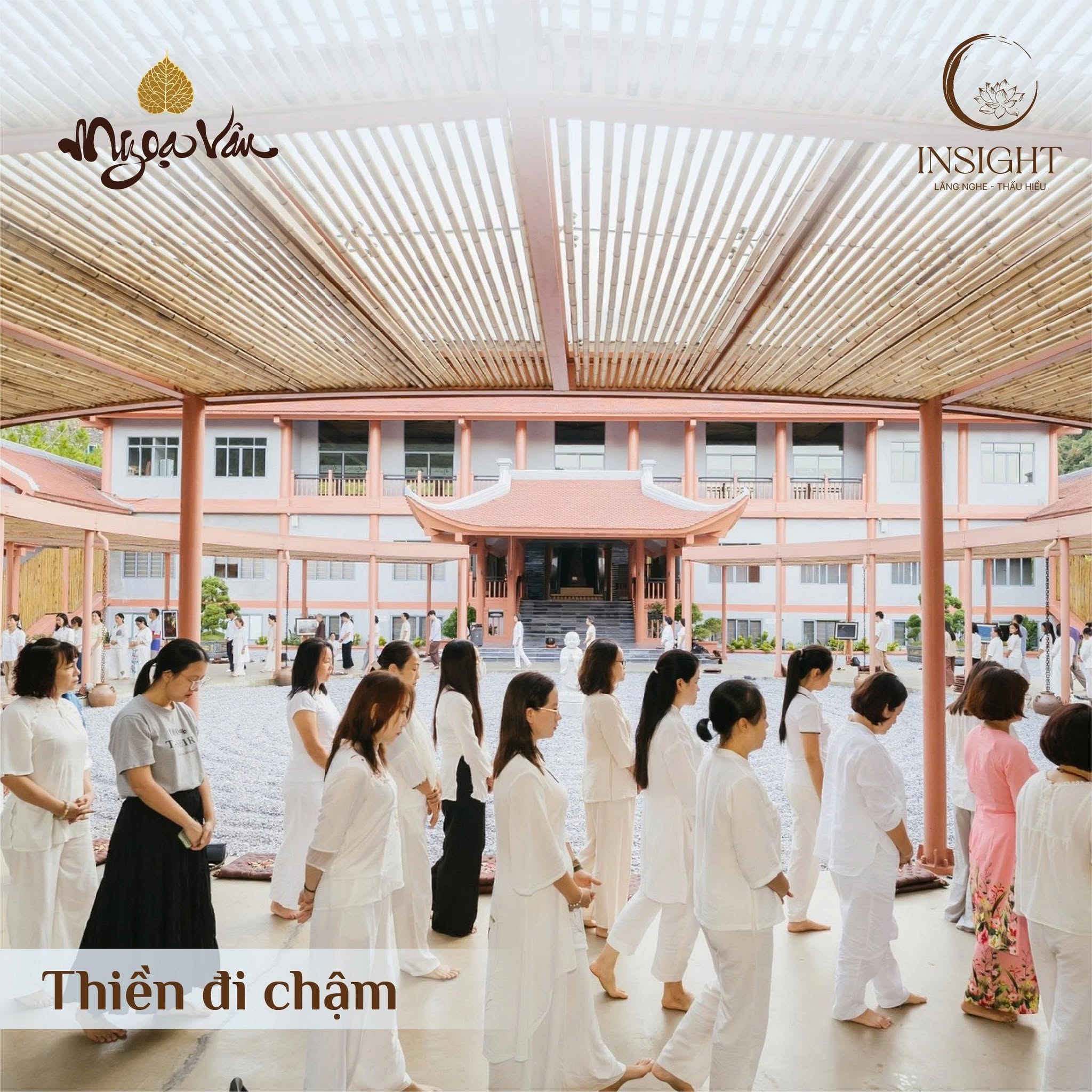
Tea meditation: then receives the awakened body and brings it into a deeper state of tranquility. From movement to stillness this is the natural rhythm of life cultivation: yang then yin, motion then stillness, exhaling then inhaling.
Part 4: At Ngoa Van Where Life Cultivation Has 700 Years of Depth
One can practice mindful walking and tea meditation anywhere. But there are places where these two practices become exponentially more profound because the environment resonates with the inner self in ways that are difficult to fully explain rationally.
Ngoa Van Zen Village: in Trai Loc Area, An Sinh Ward, Quang Ninh Province, is one of the rare places in Northern Vietnam that gathers all the most ideal conditions for this combined life cultivation experience:
Primary Pine Forest The Perfect Natural Life Cultivation Gym
Ngoa Van is located on Bao Dai mountain at an altitude of 500–700m, surrounded by pine forests and primary ancient forests of the Yen Tu range a strictly protected ecosystem as it is a special national historical relic.
The air here is rich in phytoncides from the pine forest, with ideal humidity and temperature, free from industrial or traffic noise. The Japanese government incorporated Shinrin-yoku into its public health program after research proved that walking in the forest helps reduce blood pressure, cortisol, and improves concentration and memory. The Ngoa Van forest is an ideal place to practice exactly that spirit.
Tea Meditation at Truc Lam Zen Hall The Endpoint of the Life Cultivation Circle
After the walking journey, the Truc Lam Zen Hall of the Zen Village welcomes you with a tranquil space featuring the lacquer painting "Supreme Wisdom and Freedom" and the faint scent of agarwood.
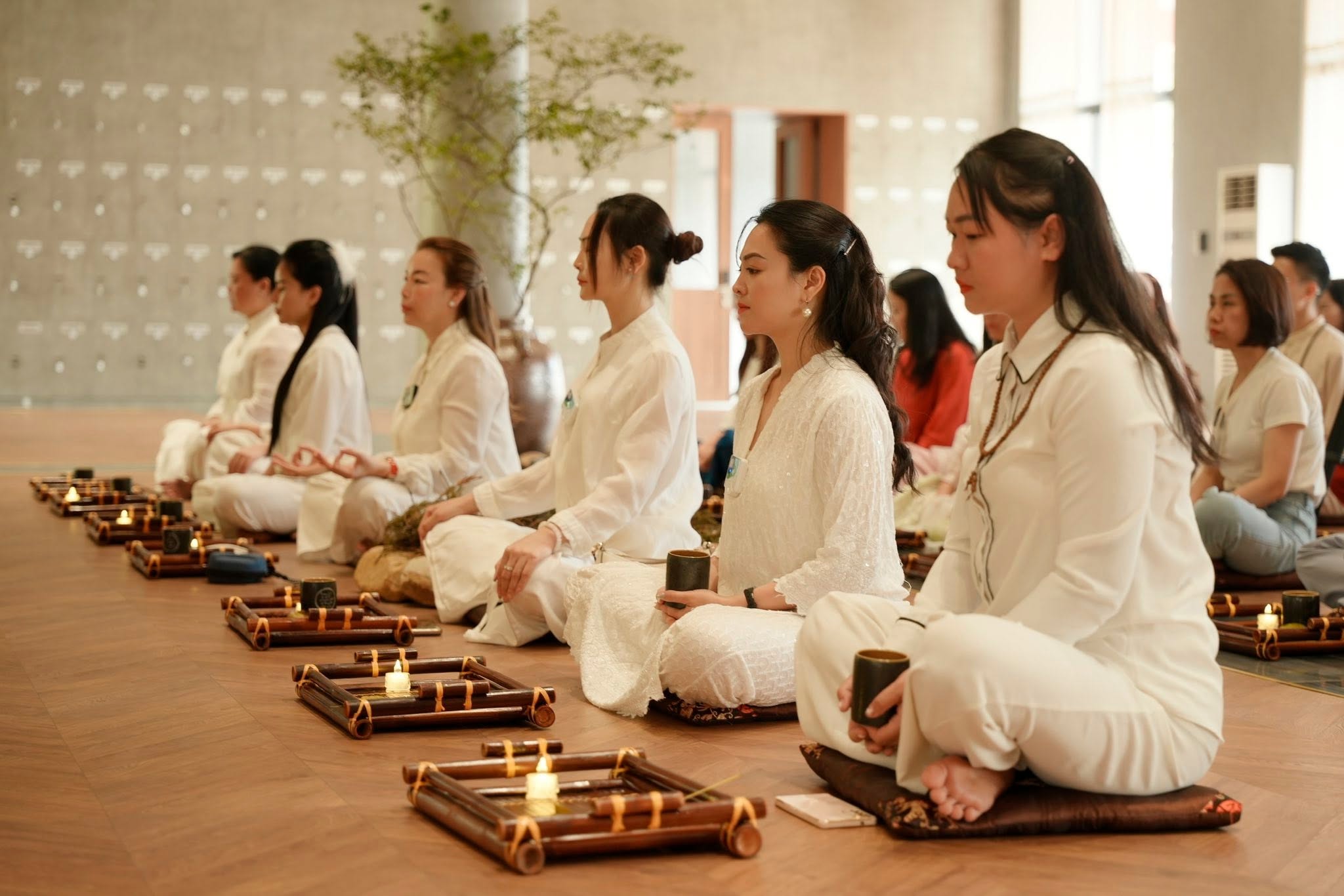
The body, after just enough movement, will be more ready to sit still, and the mind, after being "freed" through mindful walking, will also settle down more easily. This is why combining mindful walking with tea meditation is more effective than either alone: movement prepares the body, stillness perfects the mind.
Sit down. Raise the warm teacup with both hands. Breathe in the tea's aroma the scent of something ancient and peaceful. Drink slowly. And realize: this is the moment you are truly here, completely.
What You Can Take Home
The most beautiful thing about these two life cultivation practices is: you do not need to be at Ngoa Van to continue practicing them.
Mindful walking can be practiced every morning on the way to work just turn off your headphones, step 20% slower, and pay attention to each footstep instead of being in the next meeting in your mind.
Tea meditation can be practiced every afternoon with a cup of tea at home no need for an expensive tea set, no need for a special space, just 10 minutes of doing nothing else but drinking tea in silence.
Even just a few minutes of practice every day can bring significant benefits. The important thing to remember: mindfulness is not reserved for those with plenty of time it is for anyone willing to be present in this moment.
Ngoa Van gives you the opportunity to experience these two practices in the most ideal conditions so you know what that feels like, and can take it back to apply in your daily life.
Conclusion: Life Cultivation is Not a Luxury It is the Most Basic Thing
In Eastern medicine, life cultivation is not a luxury reserved for the wealthy or retirees. It is a basic responsibility to oneself because only a well-nourished body and mind can do valuable things for oneself and those around.
Buddhist Emperor Tran Nhan Tong who led the army and people to defeat the Mongol invaders twice, ruled the country for 15 years, and then spent the last years of his life practicing asceticism and life cultivation on Bao Dai mountain perhaps understood this more deeply than anyone.
He left behind the Truc Lam Zen lineage as a life cultivation legacy for the Vietnamese nation. And at Ngoa Van the place He chose to lie in the clouds that spirit is still flowing in every breath of the pine forest, in every sip of afternoon tea, in every slow footstep amidst pristine nature.
"Living in the world, joyful in the Way, let things take their natural course, When hungry, eat; when tired, sleep."
Buddhist Emperor Tran Nhan Tong
Life cultivation, in its deepest sense, is exactly that: living true to your own natural rhythm no forcing, no running away, just being completely present in every moment.

 Ngày
31/07/2026
Ngày
31/07/2026


