


THE SACRED FULL MOON AT NGOA VAN: REVERENT OFFERINGS AND THE ETHEREAL ATMOSPHERE OF THE ANCESTRAL SANCTUARY
What is the significance of the 15th of the 7th lunar month - the main day of the Vu Lan Festival?
The 15th day of the 7th lunar month every year is known as the main day of the Vu Lan Festival (Ullambana) for filial piety, and is also the occasion of the Ghost Festival (forgiving wandering souls) in Vietnamese folk beliefs. According to the story in the Ullambana Sutra, this is the day Venerable Maudgalyayana - one of the two chief disciples of the Buddha - prepared offerings for the Sangha, relying on the spiritual power of the monastic community to save his mother from suffering. From that story, the Buddha taught that every year on the full moon of the 7th lunar month, Buddhist followers should hold a filial piety ceremony for their living parents and pray for the salvation of their deceased parents and ancestors.

In 2026, the main full moon day of the 7th lunar month falls on Thursday, August 27th of the solar calendar. This also coincides with the Pravarana (Tự Tứ) ceremony of the monks after a three-month summer retreat, so according to Buddhist concepts, the merit of making offerings on this day carries a particularly pure and complete significance.
The atmosphere at the Ancestral Land of Ngoa Van on the main festival day
If an ordinary day at Ngoa Van is marked by the tranquility of clouds and mountains, the main full moon day of the 7th lunar month brings a different rhythm - still solemn, but warmer and more bustling with the footsteps of thousands of returning Buddhists and tourists. From early morning, streams of people line up for the cable car, holding lotus flowers and pristine vegetarian offering baskets, their faces settling into an indescribable reverence.
In the incense smoke spreading throughout Ngoa Van Hermitage, the chanting of sutras blending with the sound of bells and wooden fish echoing through the mountain forest, some quietly shed tears remembering their deceased parents, while others simply stand silently looking at the statue of the Buddhist Emperor in the Nirvana posture and feel their hearts lightened. That is the special atmosphere that only the main festival day at a sanctuary like Ngoa Van can bring - where belief and personal emotion blend seamlessly into one.
Offering rituals at Ngoa Van on the full moon day of the 7th lunar month
A complete main festival journey at Ngoa Van usually includes the following rituals:
Offering to the Three Jewels: At Middle Ngoa Van Pagoda and Ngoa Van Hermitage, Buddhists respectfully present gifts and sincerely make offerings to the Three Jewels (Buddha - Dharma - Sangha), in the exact spirit that Venerable Maudgalyayana practiced to save his mother in the past.
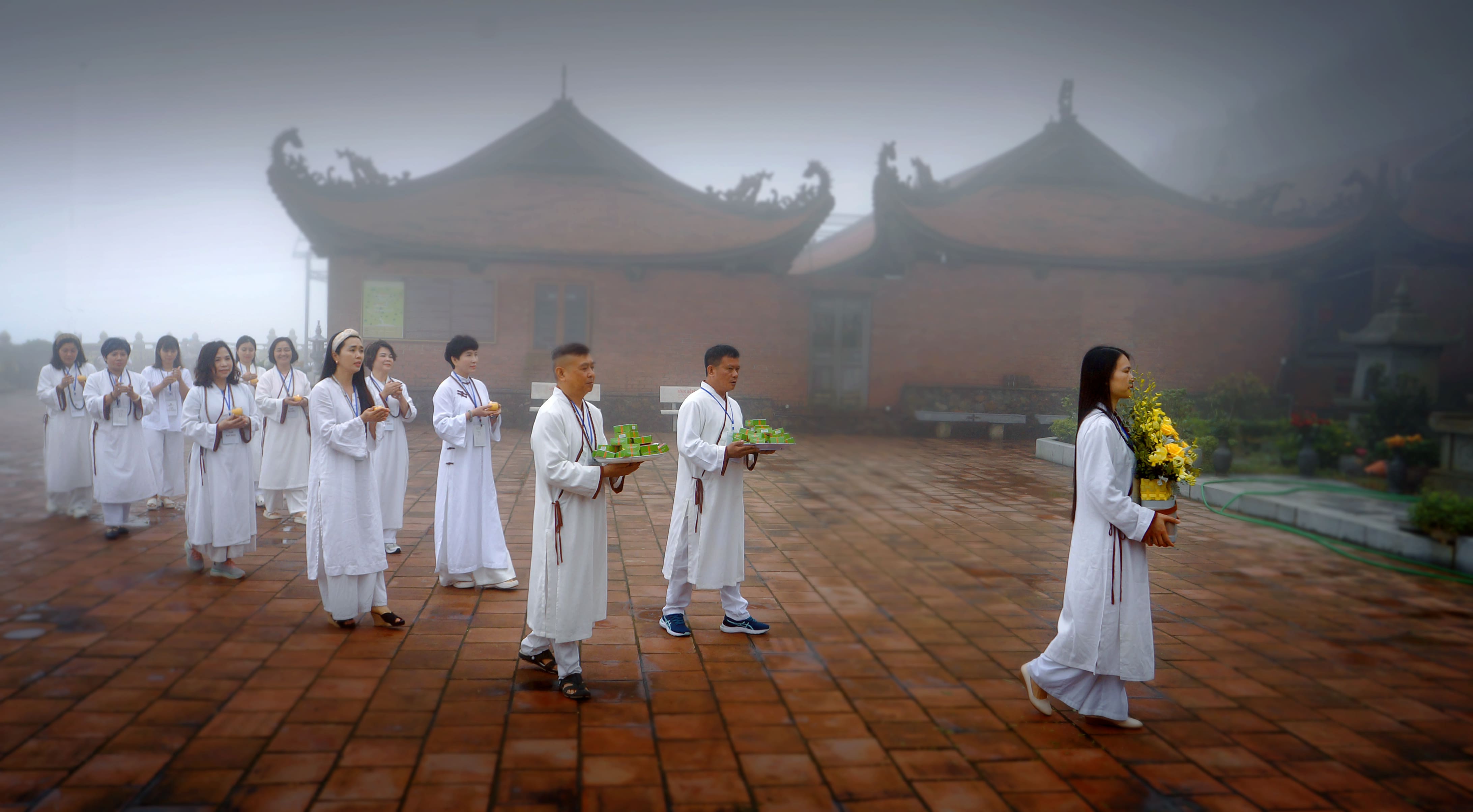
Chanting the Ullambana Sutra and praying for salvation: The ritual of chanting the Ullambana Sutra is held solemnly, praying for living parents to be peaceful, and for deceased parents and ancestors of nine generations to be liberated.
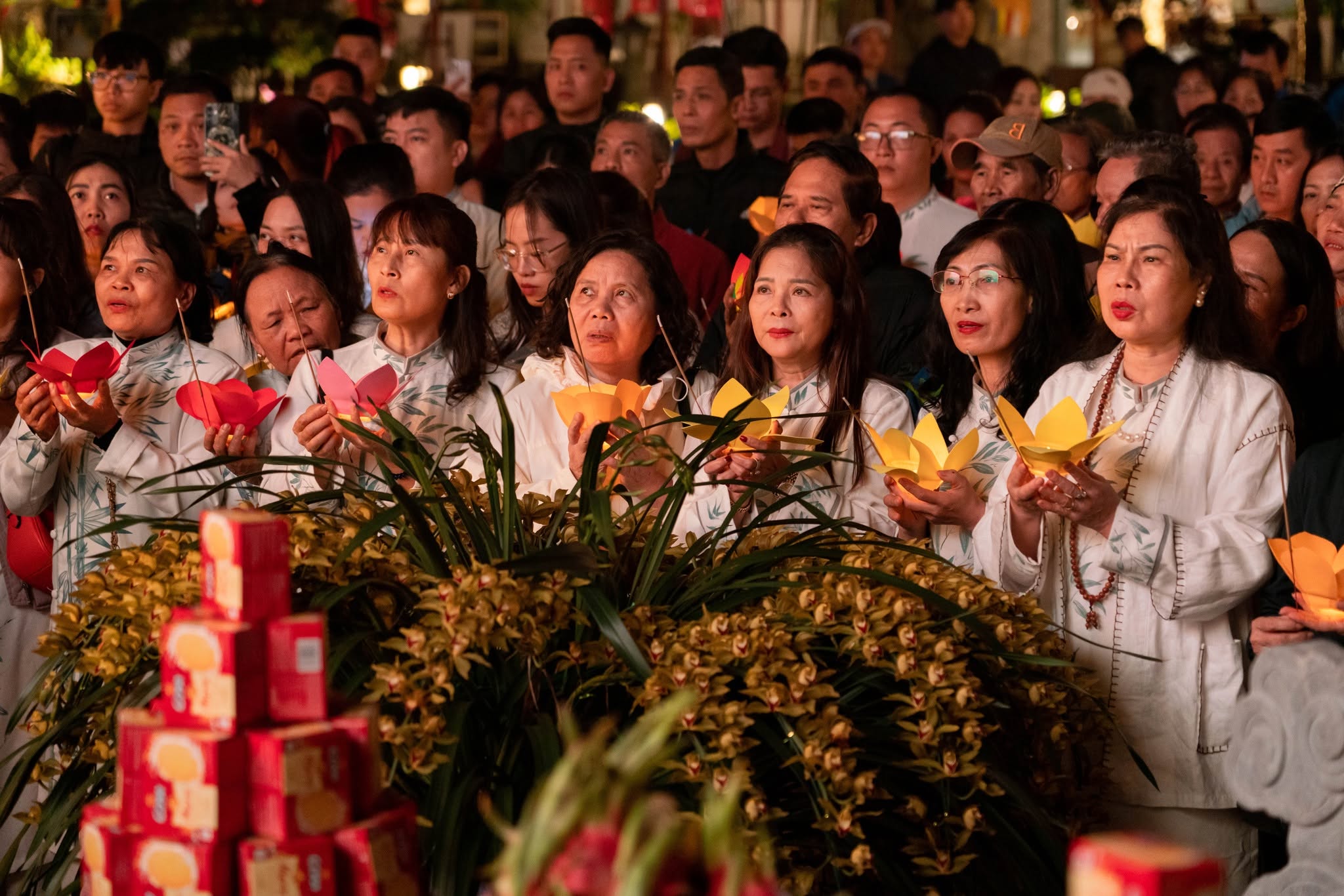
Food offering ceremony and doing good deeds: In true accordance with the "forgiving wandering souls" spirit of the 7th lunar month's full moon, many pilgrimage groups also perform the ritual of offering food and giving alms to homeless spirits, combined with doing charitable deeds, releasing living creatures, and dedicating merit.
Venerating the Buddhist Emperor's Stupa: Closing the journey is a moment of standing silently before the Buddhist Emperor's Stupa - where a portion of King Tran Nhan Tong's relics is preserved - to fully feel the significance of returning to the Ancestral Land on the grandest day of the Vu Lan season.
Things to prepare when going on a pilgrimage on the main festival day
Go early to avoid crowds: The main festival day usually attracts a large number of Buddhists and tourists, so departing early in the morning will give you more time for each ritual, while also avoiding long waits at the cable car area.
Pure offerings: You should prepare pure vegetarian offerings - fresh flowers, fruits, sticky rice, sweet soup, incense, and candles - avoiding taking life or preparing meat dishes on this important Buddhist holiday.
Polite and modest attire: Elegant colors and comfortable footwear for moving between incense offering points.
Keep a pure mind: Limit noisy talking, turn off phone ringtones when entering the main hall area, and line up orderly when offering incense so that the solemn atmosphere is fully preserved for everyone.
Prepare your health: Because of the large crowds, you may have to move and stand waiting longer than on normal days, so prepare drinking water and be in good health, especially for the elderly or young children traveling with you.
Suggested itinerary for the main festival day at Ngoa Van
- Early morning: Depart from Hanoi or neighboring provinces, offer incense at An Sinh Temple - the Ancestral Temple of the Tran Dynasty
- Mid-morning: Take the cable car to Ngoa Van Hermitage and Pagoda, offer incense at Middle Ngoa Van Pagoda
- Noon: Offering ceremony to the Three Jewels, chanting the Ullambana Sutra at Ngoa Van Hermitage
- Afternoon: Venerate the Buddhist Emperor's Stupa, perform the food offering ritual and charitable activities (if there is an organized program)
- Late afternoon: Descend the mountain, have a vegetarian meal, and return with a peaceful mind
Conclusion
The full moon of the 7th lunar month at Ngoa Van is not merely an annual holiday, but a moment for every person to temporarily put aside their busyness, return to their roots, and express their deepest gratitude. Amidst the incense smoke and the echoing pagoda bells at the Buddhist Emperor's Sanctuary, perhaps that is when filial piety is felt most completely - not through words, but through presence.

 Ngày
31/07/2026
Ngày
31/07/2026


