


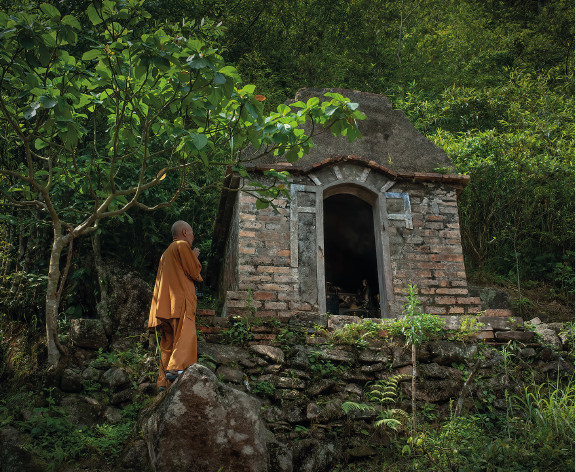
Ở đời vui đạo hãy tùy duyên
Đói đến thì ăn mệt ngủ liền
Trong nhà có báu thôi tìm kiếm
Đối cảnh vô tâm chớ hỏi thiền.
These verses express the philosophy of “living in the world while following the Way” of King–Buddha Trần Nhân Tông. He was the First Patriarch and the founder of the Trúc Lâm Yên Tử Zen School—a Zen lineage that unified the earlier schools of Tì-ni-đa-lưu-chi, Vô Ngôn Thông, and Thảo Đường under his leadership.
This Zen tradition embodies the spirit of engaged Buddhism, deeply rooted in Vietnamese national identity. With this spirit, followers of the Buddha are called to immerse themselves in life—sharing in the joy of the nation and the suffering of its people—yet, in times of peace, returning to a life of spiritual practice and transcendence.
King–Buddha Trần Nhân Tông.
King–Buddha Trần Nhân Tông was the third emperor of the Trần Dynasty, with the given name Trần Khâm. He was born on November 11, in the 8th year of the Nguyên Phong era during the reign of King Trần Thánh Tông (1258).
He ruled for 14 years, and in 1293, he abdicated the throne to his son, Trần Anh Tông. He then retired to Thiên Trường as the Retired Emperor (Thái Thượng Hoàng), where he continued to guide and assist the new king in governing and managing the country.
Out of deep reverence for the great Zen masters of Yên Tử, in September 1299, when King Trần Anh Tông had matured, the Retired Emperor Trần Nhân Tông officially renounced worldly life and undertook ascetic practice at Tử Tiêu Peak on Yên Tử Mountain. He adopted the dharma name Hương Vân Đại Đầu Đà and styled himself Trúc Lâm Đại Sĩ. He founded the Trúc Lâm Yên Tử Zen School—a distinctly Vietnamese Zen tradition guided by the philosophy of “Cư Trần Lạc Đạo” (living in the world while embracing the Way).
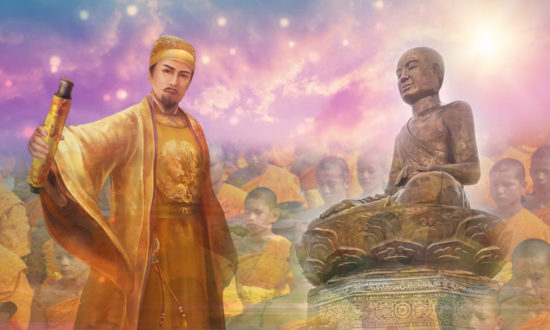
King–Buddha Trần Nhân Tông.
After more than a year, in 1295, he left Thiên Trường Palace and went to practice monastic life at Vũ Lâm Palace in Gia Khánh, Ninh Bình.
After a period of ascetic practice at Yên Tử, he descended the mountain and traveled through villages, teaching people to abolish superstitious practices, observe the Ten Wholesome Deeds, and provide medicine to the poor.
In May 1307, Trúc Lâm Đại Sĩ went to practice at a small hermitage on Ngọa Vân peak.
On November 1, 1308, he peacefully entered Nirvana at Ngọa Vân Hermitage. Ngọa Vân Hermitage–Pagoda is where King–Buddha Trần Nhân Tông practiced and attained Buddhahood—it is considered the sacred land of the Trúc Lâm Yên Tử Zen School.
The Ngọa Vân Hermitage–Pagoda complex is located on the high mountain “Bảo Đài Sơn,” on the western side of the Yên Tử range—part of the Đông Triều arc. Today, it belongs to the Tây Sơn area, Bình Khê ward, Đông Triều city, Quảng Ninh province. Ngọa Vân is one of the 14 key historical sites within the Trần Dynasty historical complex in Đông Triều, officially recognized by the Prime Minister as a Special National Historical Site (Decision No. 2383/QĐ-TTg, dated December 9, 2013).
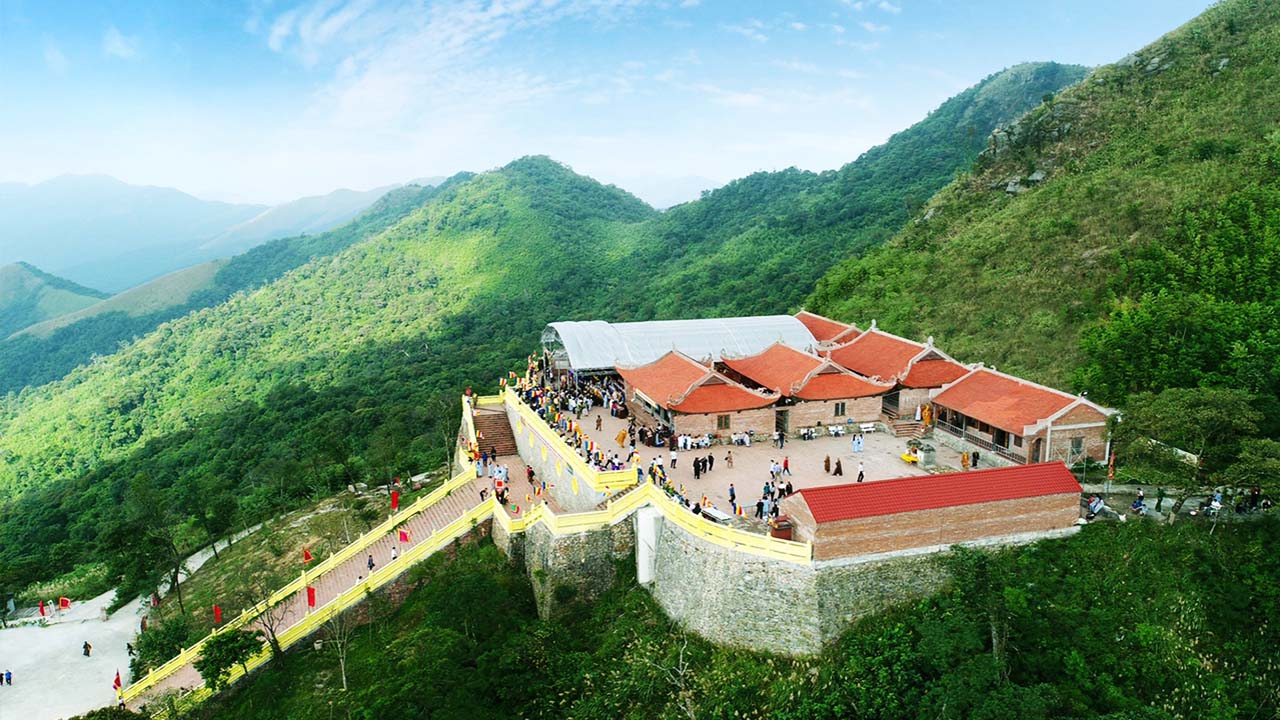
Ngọa Vân was originally just a small hermitage where King–Buddha Trần Nhân Tông practiced and attained Buddhahood. After his passing, the royal court and the second patriarch of the Trúc Lâm Yên Tử Zen School, Pháp Loa, expanded Ngọa Vân into a large complex of temples and stupas on Bảo Đài Mountain. This became one of the major architectural complexes of the Trúc Lâm Zen tradition on the western side of the Yên Tử range.
The name “Ngọa Vân” originally refers to a mountain peak on Bảo Đài Mountain that is covered in clouds all year round. “Ngọa Vân” literally means “reclining clouds.” Located within the Đông Triều mountain arc, the peak is shielded to the north by a high mountain range (Vây Rồng). As moist sea air blows inland, it is blocked by this range and condenses into clouds, causing the southern slopes—including Ngọa Vân Peak—to remain shrouded in mist throughout the year, creating a mystical and ethereal landscape.
Therefore, the name Ngọa Vân was given, and “Ngọa Vân Hermitage” can be understood as “the hermitage resting on clouds.” The peak is also known by its Sino-Vietnamese name “Vân Phong,” so Ngọa Vân Pagoda and Hermitage are sometimes referred to as Vân Phong Pagoda and Vân Phong Hermitage.
NGỌA VÂN IS ARRANGED INTO THREE TIERS:
Top tier: Bàn Cờ Tiên, Ngọa Vân Upper Hermitage–Pagoda, and the King–Buddha stupa complex of Trần Nhân Tông.
Second tier: Ngọa Vân Middle Pagoda, located about 200 meters to the southwest of the upper pagoda.
Third tier: The remaining relics at the foot of the mountain, including 4 clusters and 15 different historical sites such as Thông Đàn, Đô Kiệu, Đá Chồng, Ba Bậc, Tàn Lọng, and Cửa Phủ.
Top tier: Bàn Cờ Tiên, Ngọa Vân Upper Hermitage–Pagoda, and the King–Buddha stupa complex of Trần Nhân Tông.
The top tier is the area that includes the Upper Hermitage–Pagoda, the King–Buddha stupa complex, and Bàn Cờ Tiên.
The architecture of Ngọa Vân Hermitage–Pagoda during the Trần Dynasty was modest in scale and oriented toward the southwest. By the 15th century, during the Early Lê period when Confucianism was the state ideology, this area was neglected and fell into serious disrepair. It was not until the Later Lê Restoration period, when Buddhism flourished again, that temples and stupas received renewed attention from the aristocracy and were rebuilt on a grander scale.
Notably, in the year Đinh Hợi (1707), under the Vĩnh Thịnh era, Ngọa Vân underwent its most significant restoration. During the resistance against the French, the site was heavily damaged and left in ruins. It was not until 2002 that the Upper Ngọa Vân Hermitage–Pagoda was restored to its present state.
Today, the remaining architecture is concentrated on two foundation levels:
Foundation Level 1:
This is the courtyard of the Upper Pagoda, located about 3 meters lower than the main temple platform. It features two relatively large lotus-shaped Buddhist stone stupas: the King–Buddha Stupa and Đoan Nghiêm Stupa, associated with Trần Nhân Tông.
Both stupas are constructed from stone materials, including laterite (iron-rich “đá ong”) and other types of stone. Their structure has a square ground plan, consisting of one base tier, two body tiers, and a finial shaped like a gourd (hồ lô).
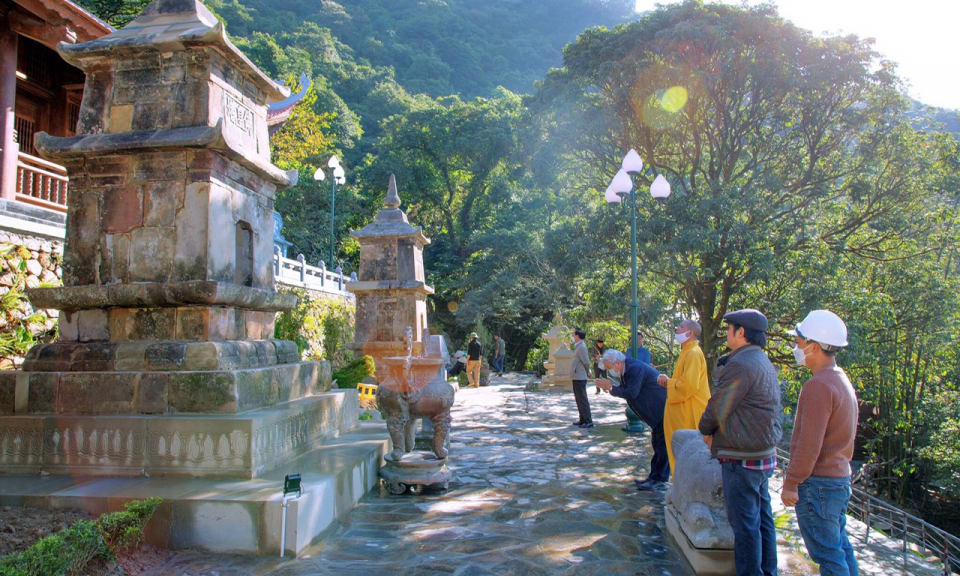
The King–Buddha Stupa and Đoan Nghiêm Stupa of Trần Nhân Tông.
KING–BUDDHA STUPA (PHẬT HOÀNG THÁP):
Located on the western side of the first foundation level, it was originally built during the Trần Dynasty under the direction of Pháp Loa. This is where the relics (xá lợi) of King–Buddha Trần Nhân Tông are enshrined.
By the Later Lê period (18th century), the original stupa had fallen into ruin. In 1707, Zen Master Đức Hưng (also known as Viên Minh) oversaw its reconstruction. In front of the stupa stand a stone elephant statue and a stone stele dating from the 21st year of the Minh Mệnh era (1840).
Inside the stupa is a green stone tablet engraved with 17 Chinese characters honoring Trần Nhân Tông as the First Patriarch of the Trúc Lâm Zen lineage and the third emperor of the Trần Dynasty.
ĐOAN NGHIÊM STUPA:
Situated on the eastern side of the first foundation level, this is the funerary stupa of Zen Master Đức Hưng, who played a significant role—together with the royal court in the 18th century—in restoring and rebuilding Ngọa Vân.
Inside the stupa is a green stone tablet engraved with 17 Chinese characters, dedicated to Zen Master Đức Hưng, a great monk of the Thiền Lâm tradition.
Foundation Level 2:
SƠN THẦN HERMITAGE (AM SƠN THẦN):
Located about 10 meters east of the Patriarch House on the second foundation level, this hermitage has a rectangular layout with an area of about 9 m². It features a vaulted brick roof and a single entrance on the southern side.
Above the entrance is a decorative panel inscribed with three Chinese characters “Thiên Sơn Từ,” meaning a shrine dedicated to the Mountain Deities. On both sides of the doorway are parallel couplets praising the sacred land:
- “Eternal spiritual presence of the temple
- Four seasons ever-renewing in beauty.”
NGỌA VÂN UPPER PAGODA (MAIN HALL):
Also known as the Main Hall, the pagoda follows a “Nhất” (—) architectural layout and was reconstructed on its original foundation in 2000, covering an area of about 50 m². It consists of three compartments with tiled roofing and stone walls.
At the entrance, a pair of couplets reads:
“All things are without fault – misfortune lies in the human mind,”
reflecting the humanistic philosophy of King–Buddha Trần Nhân Tông and the Trúc Lâm Zen teaching of directly realizing one’s true nature to attain Buddhahood.
Located to the west of the second foundation level and about 2.5 meters higher is Ngọa Vân Hermitage, where a statue of King–Buddha Trần Nhân Tông is placed in a reclining posture, symbolizing the Buddha entering Nirvana.
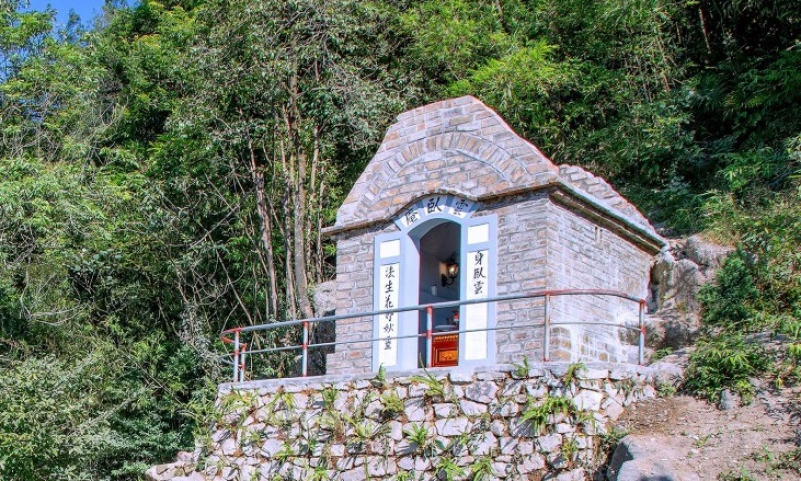
Am Ngọa Vân
NGỌA VÂN HERMITAGE:
The hermitage is built of brick, with a vaulted brick roof. On the southern side, there is a single प्रवेश, above which are inscribed three Chinese characters “Ngọa Vân Am,” meaning “Ngọa Vân Hermitage.”
According to legend, when King–Buddha Trần Nhân Tông entered Nirvana, he lay in the lion posture on a large rock. This rock, where he attained Nirvana, is known as the “Nirvana Rock” (Đá Niết Bàn).
Based on historical records such as Trần Triều Thánh Tổ Các Xứ Địa Đồ, the original layout of Ngọa Vân Pagoda did not include the present hermitage. It only consisted of the Nirvana Rock, the pagoda, two stupas, and a stone stele. Therefore, the current Ngọa Vân Hermitage may have been built on the very site of the Nirvana Rock—where the King–Buddha entered Nirvana.
The highest point in this area is Bàn Cờ Tiên, which is believed to be the remains of an ancient meditation hut. The Middle Pagoda, the meditation hermitage, and the Pen Tower (located at Thông Đàn 1) lie along a straight line—this forms the sacred axis of Ngọa Vân Pagoda.
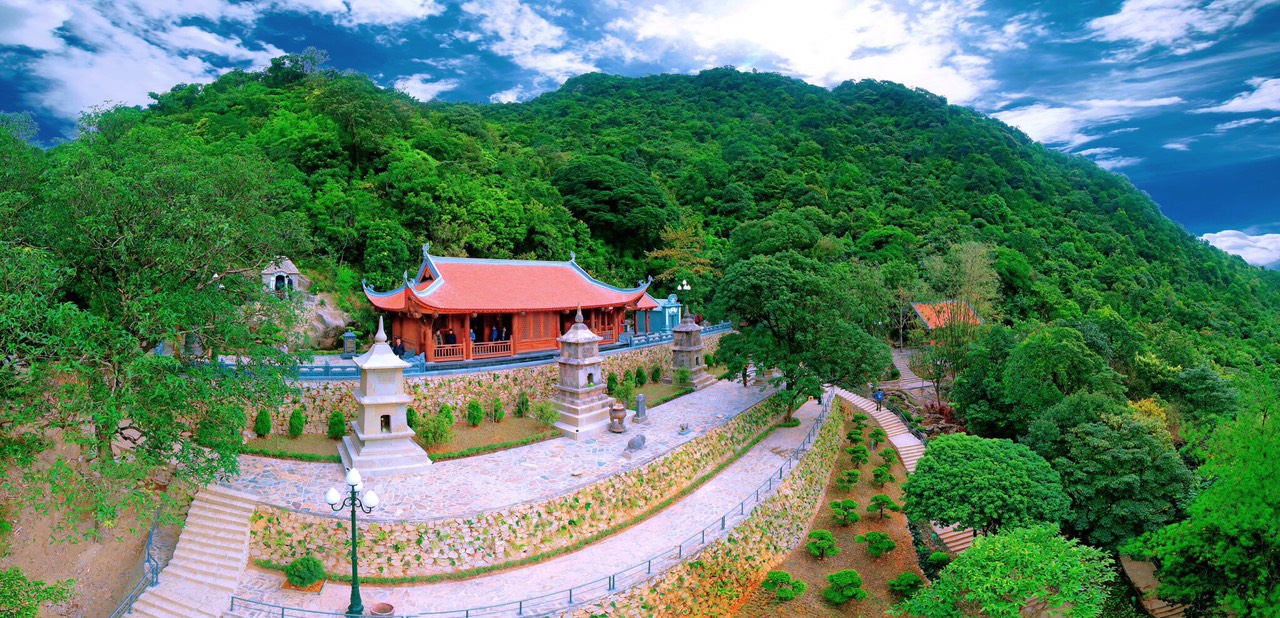
Panoramic view of the Ngọa Vân Upper area.
In December 2020, the Upper Pagoda–Ngọa Vân Hermitage complex was launched for restoration. The project reorganized the entire spatial layout and landscape into three main zones: Bàn Cờ Tiên, the hermitage–stupa area, and the auxiliary ritual area. The restoration was carried out based on the existing land conditions, respecting the original terrain and heritage landscape.
Specifically, the project focused on preserving and enhancing the site layout, improving and completing the transportation system connecting the Bàn Cờ Tiên area with the hermitage–stupa complex. It also preserved and restored Ngọa Vân Hermitage, Thiên Sơn Shrine, the King–Buddha Stupa and Đoan Nghiêm Stupa associated with Trần Nhân Tông, renovated the Patriarch House, and upgraded the ritual spaces along with a more organized traffic and landscape system.
After nearly one year of construction, the project was largely completed and scheduled for inauguration on the occasion of the 713th anniversary of the Nirvana of King–Buddha Trần Nhân Tông.
Second Tier: Ngọa Vân Middle Pagoda
The second tier of the Ngọa Vân complex is the Ngọa Vân Middle Pagoda. It is located at the central position on the southern slope of Bảo Đài Mountain (Vây Rồng range), at an elevation of approximately 588–644 meters above sea level.
In 2014, with support from authorities and contributions from the public, the restoration and reconstruction project of Ngọa Vân Middle Pagoda—on the foundation of the old pagoda—was initiated. The project was completed and inaugurated on the 9th day of the first lunar month in 2016.
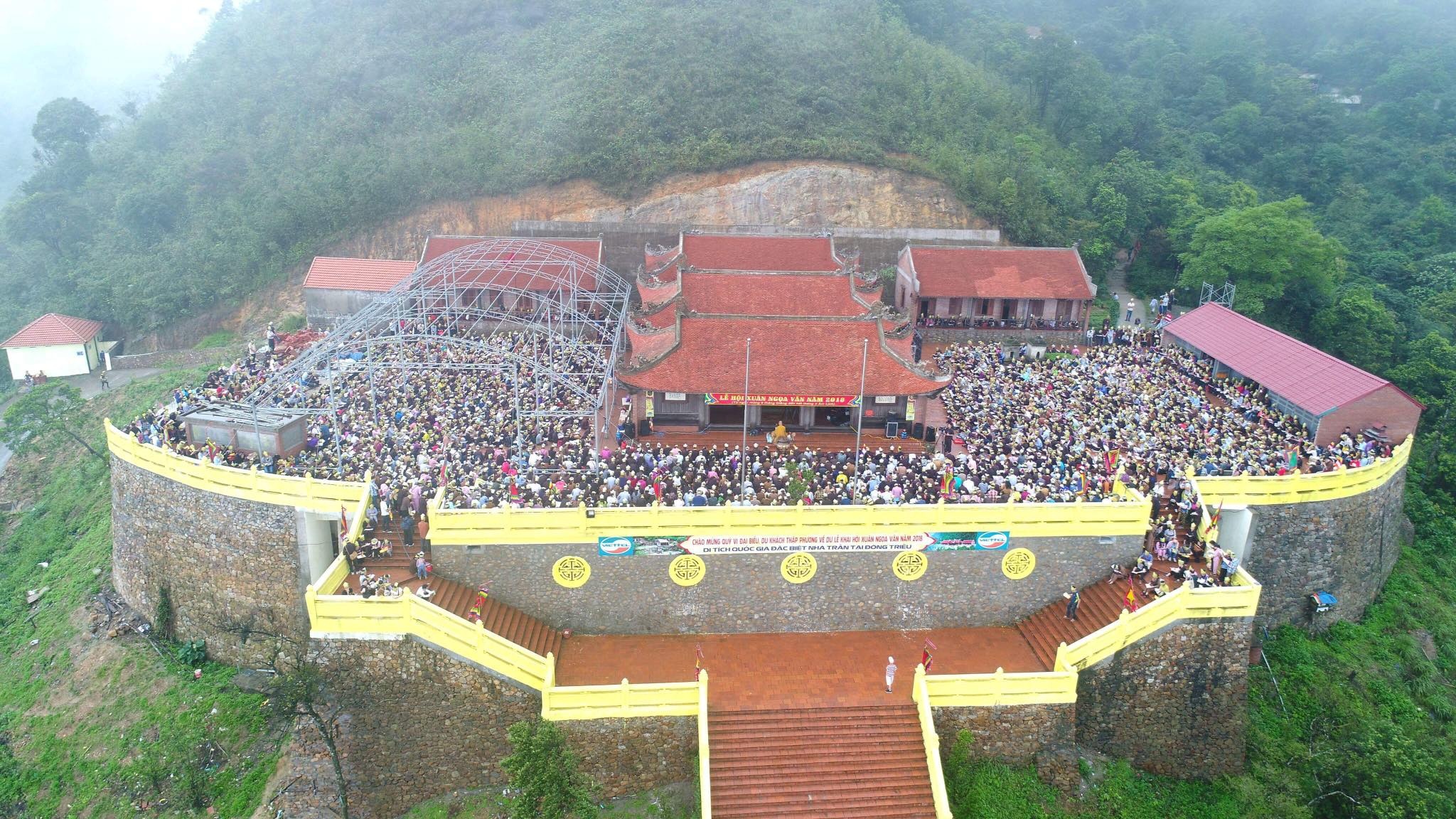
The pagoda is built in the “Nhị” (二) architectural style, modeled after the design of Ngọa Vân Pagoda from the Later Lê Restoration period in 1707. The complex consists of two main halls:
- The Front Hall (Tiền đường), where a statue of King–Buddha Trần Nhân Tông is placed, crafted from red jade stone.
- The Rear Hall (Hậu đường), designed with three compartments and two wings. At the center is the Tam Bảo altar, flanked by two Buddhist attendants: Phổ Hiền Bồ Tát and Văn Thù Bồ Tát.
- On the far left is the altar of Đức Thánh Hiền, and on the far right is the altar of Đức Ông.
In 2014, with support from authorities and contributions from the public, the restoration and reconstruction project of Ngọa Vân Pagoda—on its original foundation—was initiated and completed, with inauguration on the 9th day of the first lunar month in 2016.
Third Tier: Remaining Relic Sites
The third tier consists of the remaining heritage sites located at the foot of Bảo Đài Mountain (Ngọa Vân area). These sites are arranged along the pilgrimage route from the mountain base, including: Tàn Lọng, Cửa Phủ, Am Trà, Đô Kiệu, Thông Đàn 1, Thông Đàn 2, Thông Đàn 3, Đá Chồng, Ngọa Vân 1, Ngọa Vân 2, Ngọa Vân 6, and Ba Bậc.
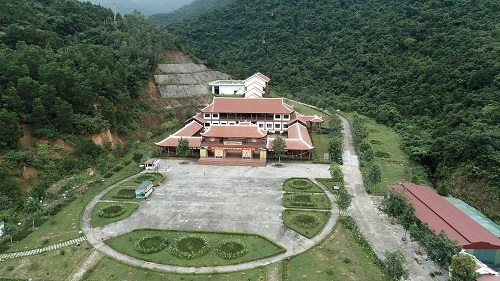
The cable car station is located in the Tàn Lọng relic area.
Tàn Lọng:
According to folk accounts of the spiritual journey and enlightenment of King–Buddha Trần Nhân Tông in villages around An Sinh and Tràng An, before reaching Cửa Phủ one must pass through an area called Tàn Lọng.
“Tàn Lọng” literally means “to fold away the royal parasol.” This location lies along the path leading up to Ngọa Vân Hermitage. From this point onward, the route enters dense forest, where the path becomes narrow—making it unnecessary and impractical to carry a royal parasol.
The ancient forest offers its shade,
No need for the king’s parasol here.
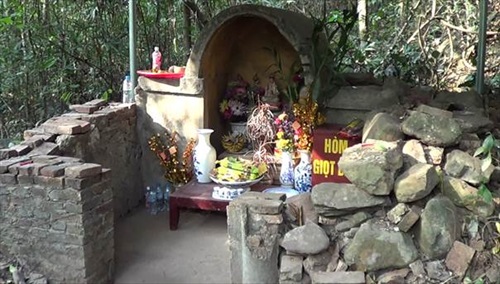
Phủ Am Trà today.
PHỦ AM TRÀ:
Phủ Am Trà, also known as Cửa Phủ, is located about 1,000 meters downstream from Đô Kiệu along the Phủ Am Trà stream, and approximately 250–300 meters from Tàn Lọng. It is a relatively flat and सुंदर участок of land, situated about 5 meters above the stream level.
The remaining traces at Cửa Phủ are the foundations of a small structure built in the early 20th century. Today, Cửa Phủ serves as a place of worship for the Forest Deity and the Mountain Deity, regarded as the guardians of this sacred woodland. Therefore, before entering the forest, visitors stop here to offer incense—seeking permission, making a respectful introduction, and praying for protection and blessings from the forest and mountain spirits.
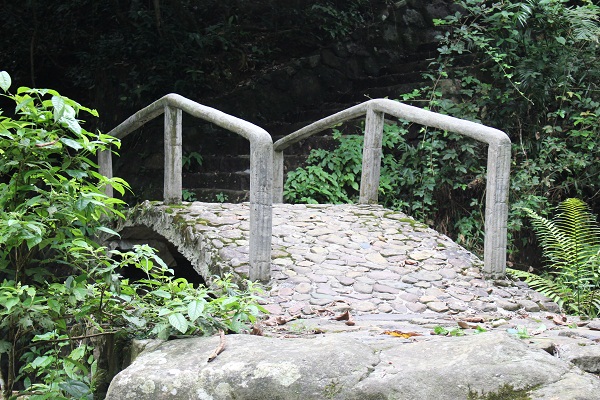
Đô Kiệu Relic Site:
ĐÔ KIỆU:
Located about 1,000 meters upstream from Cửa Phủ along the Phủ Am Trà stream, Đô Kiệu sits at the confluence of two streams flowing into the main stream. It also marks the end of a relatively flat path. From this point to Ngọa Vân Hermitage, visitors must climb a long and steep slope, with deep ravines on both sides—making it accessible only on foot.
This was the place where King–Buddha Trần Nhân Tông dismounted from his palanquin, hence the name “Đô Kiệu” (a variation of “Đỗ Kiệu”), meaning the place where one must leave the palanquin and continue on foot.
Đô Kiệu consists of two main areas:
- The “bạt bòng, bạt vải” area: a relatively flat zone used for daily activities, with structures and garden spaces.
- The Đô Kiệu slope area: a more sacred space designated for worship.
Thông Đàn:
This is a cluster of three archaeological sites, identified as Thông Đàn 1, Thông Đàn 2, and Thông Đàn 3. They are distributed along three mountain slopes stretching դեպի the southwest of the Vây Rồng range, at elevations ranging from approximately 430 to 480 meters above sea level.
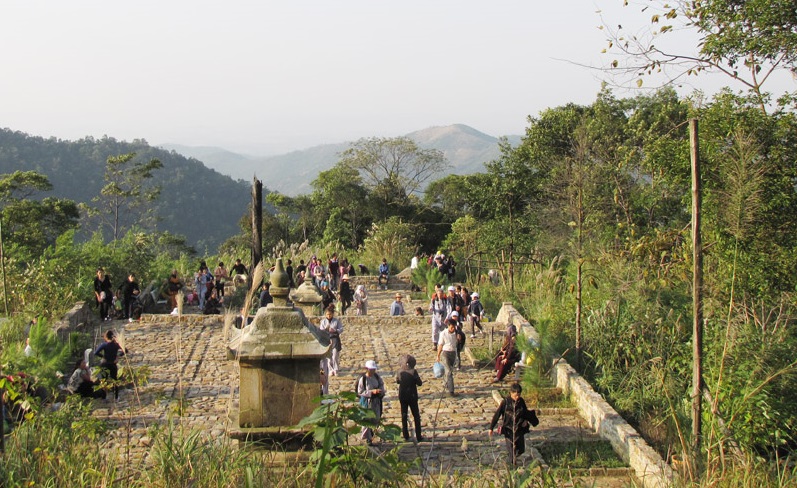
The Thông Đàn area is a resting stop for visitors on their pilgrimage to Ngọa Vân Hermitage.
The name Thông Đàn can be explained in the following ways:
First, it may refer to a place with many ancient pine trees. Second, because of these large, old pine trees, when the wind blows through their trunks and canopies, it creates sounds with various tones—like an orchestra, where each tree is like a musician. Hence, the name “Thông Đàn” (Pine Orchestra).
All three Thông Đàn sites preserve traces of architectural remains from the Trần Dynasty through the Lê and Nguyễn periods. Among them, Thông Đàn 1 is centrally located along the main path leading to Ngọa Vân Hermitage and serves as the principal axis of the entire Thông Đàn area.
During the Later Lê Restoration period, Thông Đàn 1 was restructured into two foundation levels and two stone towers were built:
- The upper level housed a Buddhist stupa (Phụng Phật Tower).
- The lower level contained the funerary stupa of a Zen master named Viên Mãn Chân Giác.
These two towers existed until around the 1980s, when they collapsed. In 2012, along with the reconstruction of the Thông Đàn 1 complex, the towers were also restored—marking the beginning of broader restoration and preservation efforts for the Ngọa Vân heritage site.
Relic Sites in the Ngọa Vân Area
NGỌA VÂN 1:
Located on the eastern outcrop of the Vây Rồng mountain range (the “Left Azure Dragon” position), this site preserves traces of stone embankments made from laterite and pebbles, along with various artifacts. It was an important hermitage–pagoda area within the Ngọa Vân complex, featuring solid construction with stone foundations, wooden columns, and lotus-tiled roofing.
NGỌA VÂN 2:
Situated about 20 meters northwest of Ngọa Vân 1, this area mainly retains remains such as column base stones, bricks, and roof tiles. It is a significant site located adjacent to the central Ngọa Vân complex.
NGỌA VÂN 6:
Located about 500 meters east of the main Ngọa Vân area, along the path from Đá Chồng to the pagoda and about 20 meters above the path to the north. This site preserves architectural foundation traces and a system of stone steps leading up from the mountain base.
It is a rectangular, relatively flat area oriented northwest–southeast, covering حوالي 42 m², with the front and sides reinforced by stone embankments and the rear leaning against the mountain slope. Artifacts found here—such as glazed ceramics and stoneware from the 17th–18th centuries—suggest that Ngọa Vân 6 was first constructed during the Later Lê Restoration period, when the Ngọa Vân complex was expanded and renovated.
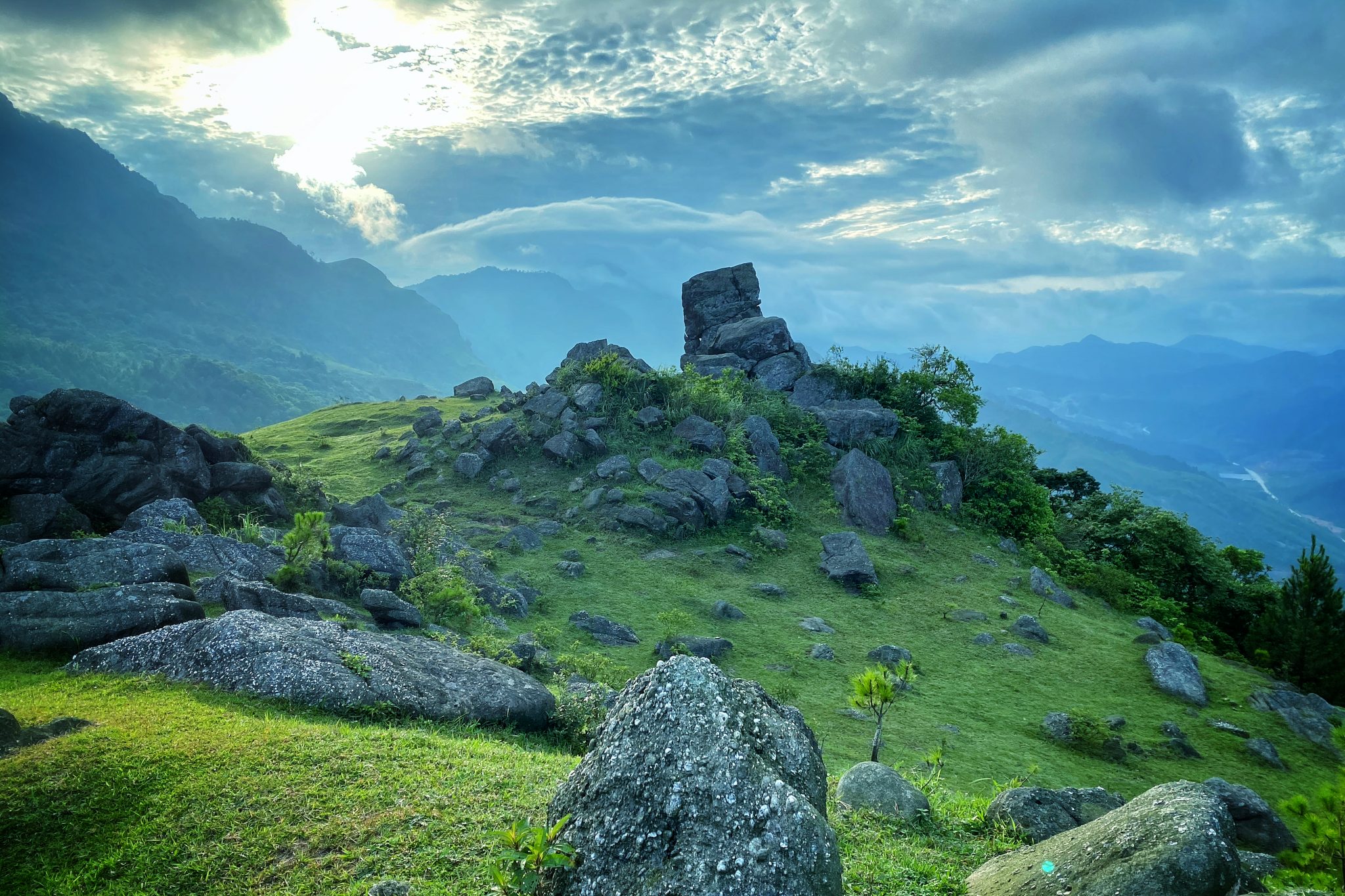
The Đá Chồng area at the foot of Bảo Đài Mountain.
ĐÁ CHỒNG AREA:
This is a cluster of structures within the Ngọa Vân heritage complex on Bảo Đài Mountain, located about 3 km from Ngọa Vân Pagoda along a mountain trail, on the southeastern slope of the Đèo Voi area.
The name “Đá Chồng” (Stacked Rocks) comes from the natural formation of large քարեր piled on top of one another at the mountain peak, creating a precarious and striking landscape.
In 2007, archaeologists discovered numerous architectural foundation remains and areas used for producing construction materials that supported the building of structures within the Ngọa Vân complex. These findings are distributed across two main zones: Đá Chồng 1 and Đá Chồng 2.
Đá Chồng 1 Area:
This area is surrounded by mountain ranges of the Đèo Voi region to the northeast and southwest, with a high mountain ridge to the northwest, the Đá Chồng peak to the southeast, and Bến Châu Lake visible in the distance.
Key remains in this area include:
- Chuồng Bò area (northwest of Đá Chồng Mountain): extending from the foot to the summit of the mountain, including a water reservoir, a stupa garden area, a central zone, and a meditation hermitage oriented toward the southeast.
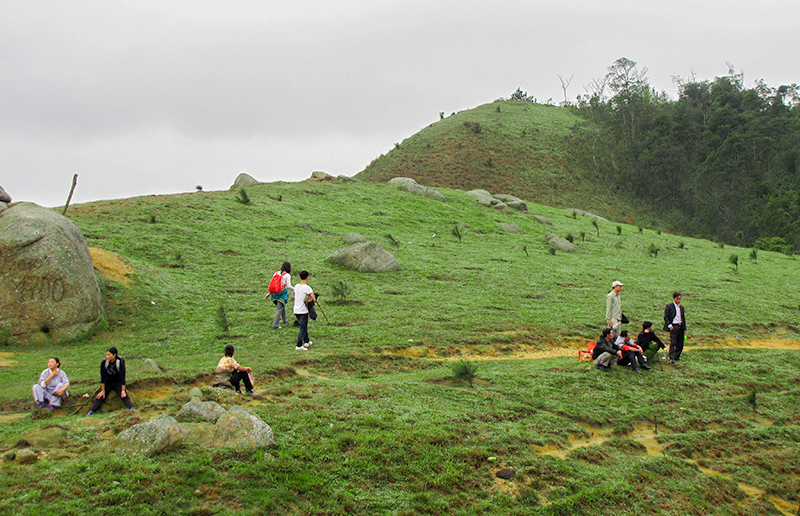
ĐÁ CHỒNG AREA (continued):
The water reservoir is where multiple streams from the surrounding high mountain slopes converge.
The stupa garden preserves traces of relatively large stone stupas, with structures similar to the King–Buddha Stupa and Đoan Nghiêm Stupa associated with Trần Nhân Tông.
The central area lies just behind the stupa garden, separated by a small stream about 5 meters wide. It has an overall rectangular layout stretching northwest–southeast, including: a front courtyard, the first architectural structure, a middle courtyard, and a second cluster of structures.
The meditation hermitage area consists of two nearly square architectural platforms of about 25 m² each—one located halfway up the mountainside and the other at the summit.
The temple garden is situated to the northeast of the central area. Although now overgrown with forest vegetation, traces of pebble-paved paths and cultivated plants can still be identified.
Đá Chồng 2 Area:
This area is relatively flat, located on the southwestern slope of Đá Chồng Mountain. Archaeological remains include two architectural foundations and traces of tile kilns dating back to the Later Lê Restoration period.
Historical and Cultural Significance:
The Đá Chồng area functioned as a production site for bricks and tiles used in constructing the Ngọa Vân complex. Built around the 18th century, it forms an important part of the overall heritage site:
- Đá Chồng 1 served as the central area, chosen for its favorable natural and spiritual (feng shui) setting.
- Đá Chồng 2 functioned as a supporting area for material production and smaller constructions.
During the resistance war against the French, Đá Chồng also served as a revolutionary base, sheltering the Hải Phòng Party Committee and acting as a hậu cứ (rear base) for the Đông Triều resistance zone. Thus, it holds significance as a historical, cultural, and revolutionary site.
Today, atop Bảo Đài Mountain, Ngọa Vân remains shrouded in clouds year-round. The Ngọa Vân Hermitage—where King–Buddha Trần Nhân Tông is worshipped—and the King–Buddha Stupa—where his relics are enshrined—still stand as sacred landmarks.
The Ngọa Vân Spring Festival is held annually from the 9th day of the first lunar month through the end of the third lunar month. Lasting for three months, it provides an opportunity for pilgrims and visitors, both domestic and international, to journey to this sacred land of the Trúc Lâm Buddhist tradition.
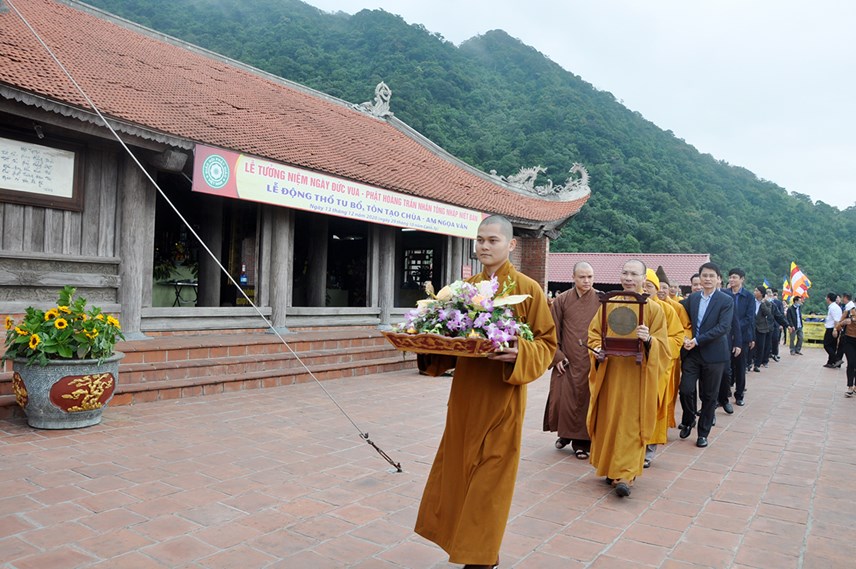
The commemoration ceremony marking the 712th anniversary of the Nirvana of King–Buddha Trần Nhân Tông at Ngọa Vân Pagoda.
For hundreds of years, Ngọa Vân Hermitage—where King–Buddha Trần Nhân Tông practiced and attained Buddhahood—has been regarded as the most sacred place, the holy land of the Trúc Lâm Buddhist tradition. It is an important part of the Trần Dynasty historical complex in Đông Triều town, officially recognized as a Special National Historical Site under Decision No. 2383/QĐ-TTg dated December 9, 2013.
Returning to this Buddhist land, pilgrims gain a deeper understanding of the spiritual journey of Trần Nhân Tông. Visitors not only admire the majestic natural beauty but also find inner peace and tranquility. Though the pilgrimage may be physically demanding, the emotions it leaves behind are profound—beyond the stunning landscapes of mountains and forests, it is also a place that inspires reflection on life, infused with deep Buddhist meaning, allowing one to fully experience both the Way and worldly life.
Ngọa Vân, a sacred and majestic land—come and make a pilgrimage to experience its beauty and serenity, and welcome a new year filled with peace and happiness.


