


DECODING NGOA VAN: WHY THE EMPEROR-MONK RENOUNCED HIS THRONE FOR THE REALM OF RESTING CLOUDS
Ngoa Van - Yen Tu.
Two names each containing a layer of history, a layer of meaning, and a secret about the man considered the most extraordinary in the history of Vietnamese dynasties the one who was a king, who led the army to defeat the Mongol invaders the most powerful in the world not once, but twice, and then: let go of everything to ascend the mountain and practice asceticism.
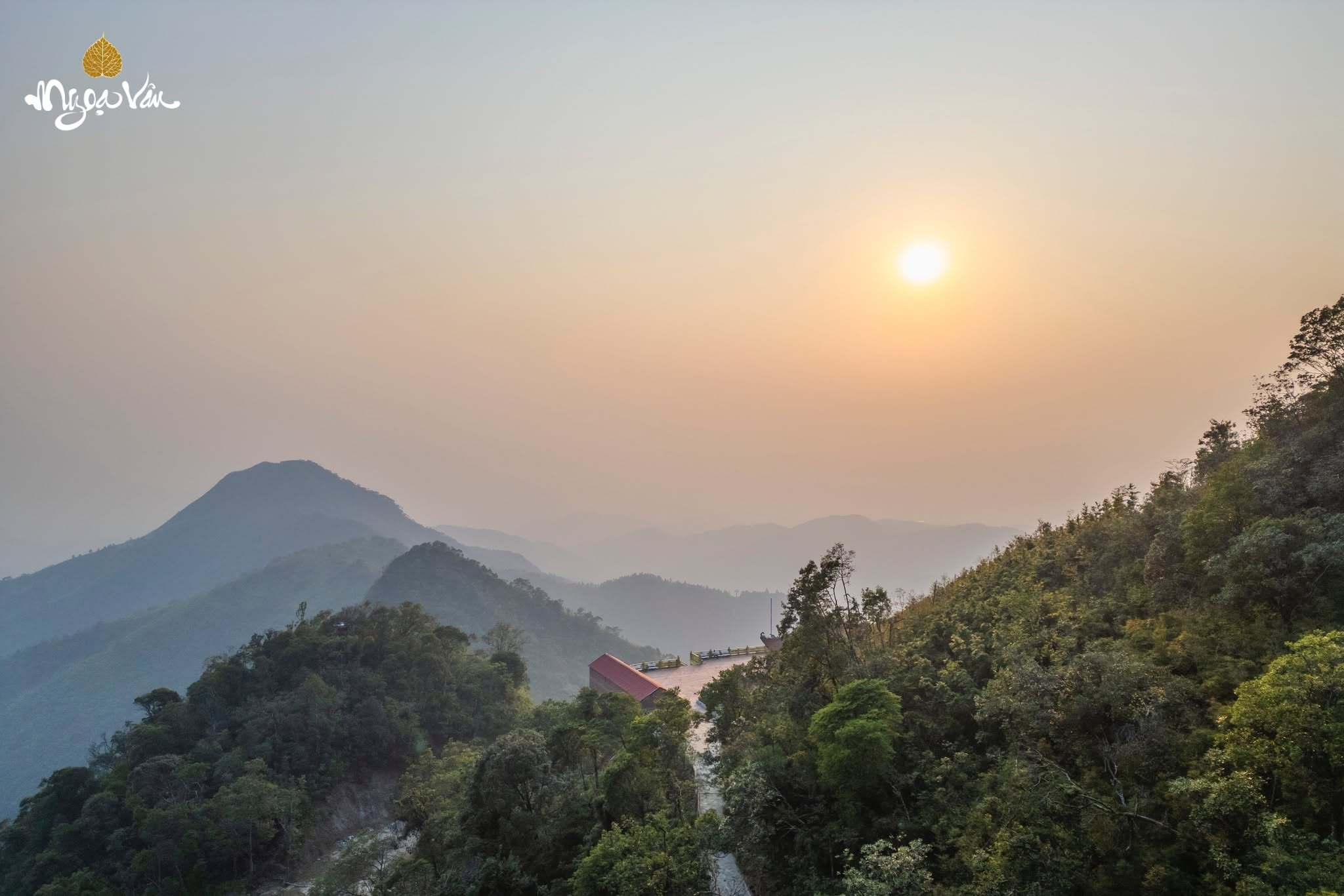
Not out of defeat. Not out of coercion. But because that was what He had wanted even before sitting on the throne.
To understand why King Tran Nhan Tong chose Yen Tu and Ngoa Van first, let us understand what these place names truly mean.
"Yen Tu" A Name Originating Even Before the Tran Dynasty
Many people naturally think that Yen Tu is named in association with Buddhism or the Tran Dynasty. In fact, the origin of this name is much older and more interesting.
Yen Tu Mountain is named after the highest peak in the range at 1,068m above sea level. This mountain has a legend that in ancient times, a figure named An Ky Sinh came here to practice asceticism and learn the Way. "An" is the surname of An Ky Sinh, "Tu" is a respectful title used to address someone. Combining the two words is to respectfully address this Taoist. Therefore, Yen Tu was originally An Tu meaning a respectful address to the Taoist An Ky Sinh who practiced asceticism on the mountain peak since ancient times.
Later generations mispronounced "An" as "Yen", and the name has been preserved to this day. But this is not the most important thing.
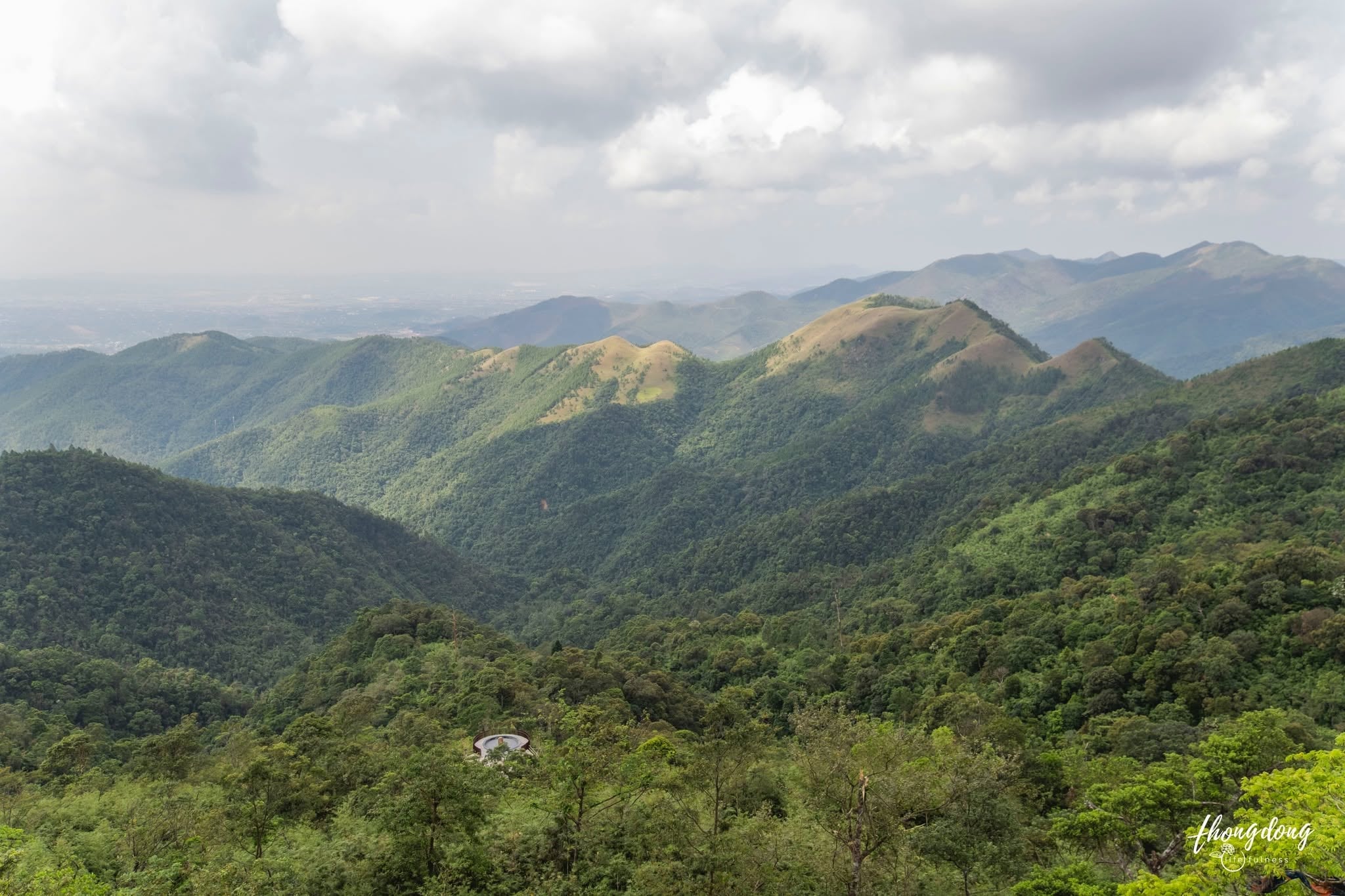
In the flow of national culture, the famous Yen Tu mountain has a tradition spanning a thousand years of history, accompanying the development process of the country. Yen Tu is also considered the "sacred land" and "blessed land" of the Vietnamese nation.
More specifically, Yen Tu is the fourth blessed land among the four regions identified by the ancients as the "blessed lands of Giao Chau" a form of spiritual planning existing at least since the Ly and Tran dynasties. This means that when Tran Nhan Tong chose Yen Tu, He did not choose it randomly. He chose exactly the land that the Vietnamese recognized as the foremost sacred land a thousand years ago.
And there is another, more intimate reason: From around the late 11th–12th centuries, the Tran lineage, originally a martial lineage living along the eastern coast, settled in the Dong Trieu area right at the foot of the Yen Tu range before taking control of Dai Viet. To Tran Nhan Tong, Yen Tu was not a strange land, it was the ancestral land of the Tran lineage ascending Yen Tu for Him was both an act of renunciation and a return.
"Ngoa Van" The Mountain Peak Named Lying Cloud
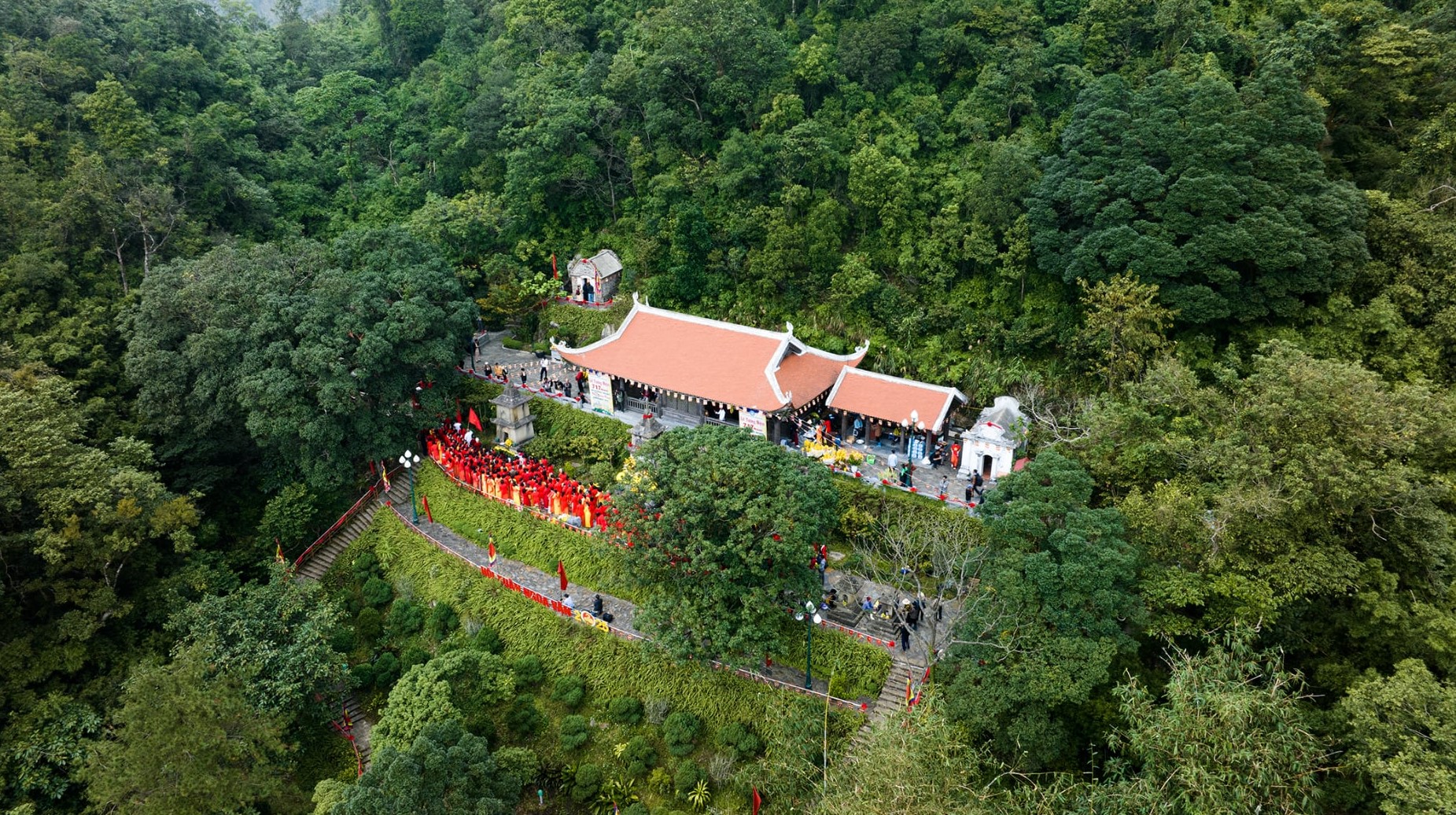
If Yen Tu was the land Tran Nhan Tong chose to practice asceticism for 10 years, then Ngoa Van was the place He chose to conclude the journey the final and most sacred sanctuary.
According to the book Record of the Three Patriarchs (Tam to thuc luc): "In the Fifth Month, the Dinh Mui year, the 15th year of the Hung Long era (1307), Dieu Ngu went to practice asceticism at a hermitage on Ngoa Van peak (卧雲峯 Ngoa Van Phong)". This is the first time the place name Ngoa Van was mentioned in the life of King Tran Nhan Tong.
This very document also reveals: Ngoa Van is the name of a mountain (卧雲峯 Ngoa Van Phong), and the hermitage on it was named after the mountain that is why both the hermitage and the mountain are named Ngoa Van.
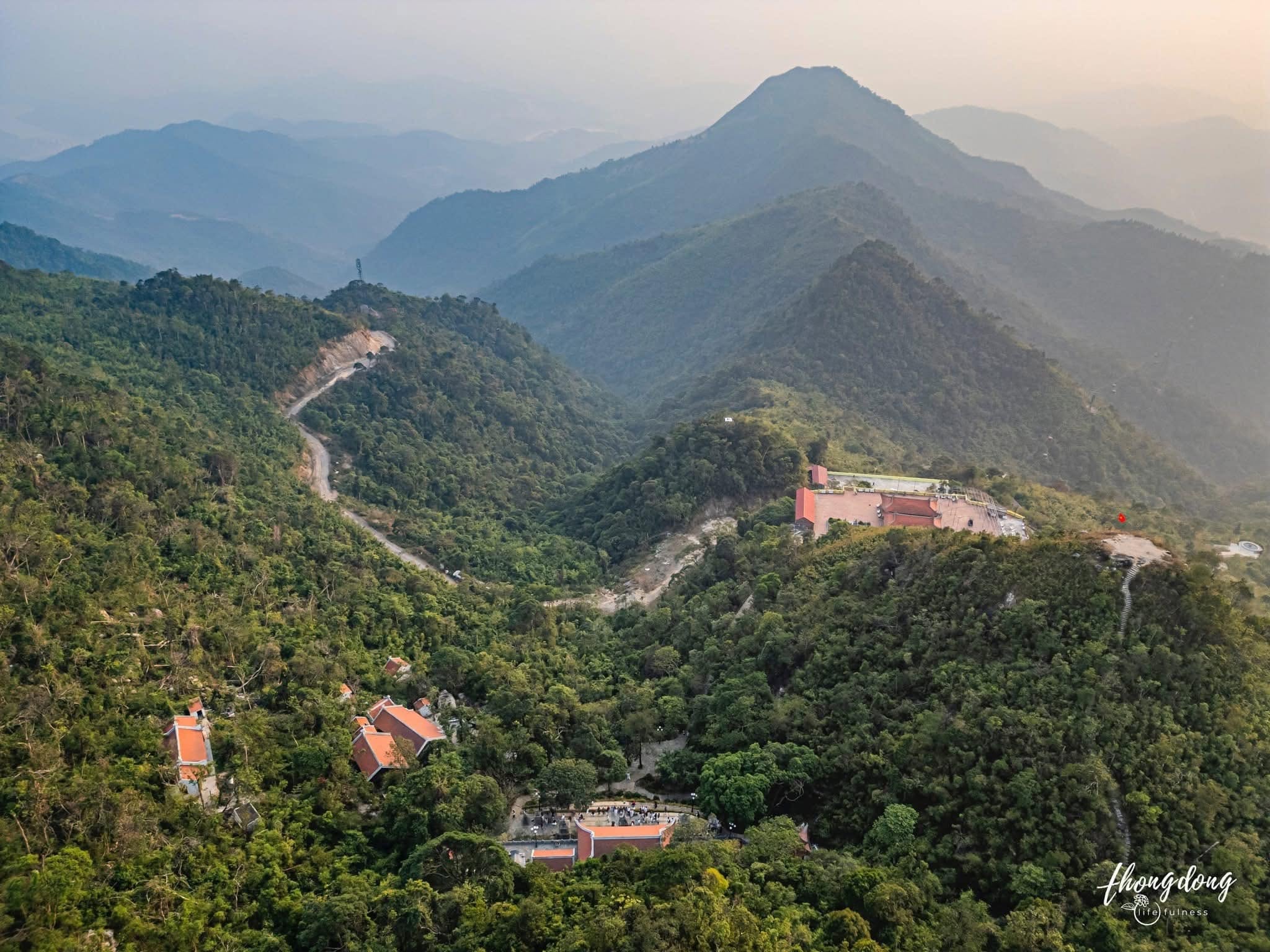
Ngoa Van was originally the name of a peak on Bao Dai mountain in the territory of two communes, An Sinh and Binh Khe, Dong Trieu district, Quang Ninh province (former), a mountain peak covered by clouds all year round. The name Ngoa Van in Sino-Vietnamese means "mountain lying in the clouds" or in other words, "lying cloud".
This is not pure poetic imagery, this is a real geographical phenomenon: Ngoa Van is located on the Dong Trieu arc, shielded to the North by a high mountain range, creating a special microclimate that makes this place covered in clouds all year round.
A person wanting to lie in the clouds no longer bound by the throne, by fame, by all the ephemeral things of the secular world could there be any more fitting image found than Ngoa Van?
Where is Ngoa Van? The Mystery Decoded After Many Decades
This is something few people know: the exact location of Ngoa Van was a debated question for many decades until archaeological excavations determined the exact answer.
In 2007, an archaeological investigation team conducted research on the system of Tran Dynasty relics in Dong Trieu within the common cultural space of the ancient An Sinh land the appanage of An Sinh Vuong Tran Lieu. Based on a combination of bibliographical and archaeological data, researchers affirmed: Ngoa Van Hermitage was built on Ngoa Van peak, Bao Dai mountain in the Yen Tu range, now called Vay Rong mountain, located in the territory of An Sinh and Binh Khe communes, Dong Trieu district, Quang Ninh province.
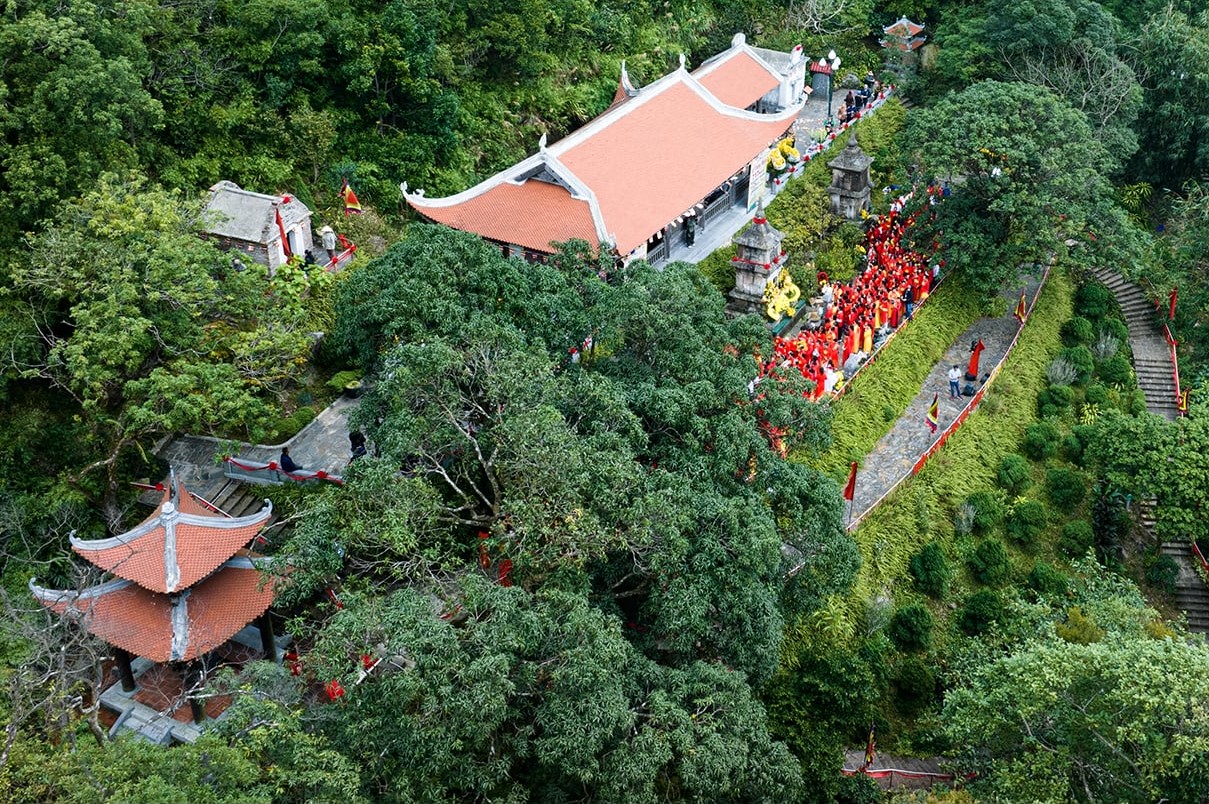
This discovery refutes the previous view that Ngoa Van is located within the Yen Tu Scenic Landscape Complex in Uong Bi, and at the same time, it reveals something more profound.
The identification of Ngoa Van's location at Bao Dai mountain in Dong Trieu has decoded and connected a seamless space of the Truc Lam Zen Sect: from Hoa Yen Long Dong (Lan Pagoda) through Ngoa Van, Thanh Mai to Con Son into a continuous space of Truc Lam Yen Tu. And that is exactly Yen Tu mountain according to the concept of the Truc Lam Zen Sect.
In other words: Ngoa Van is not an isolated point, it is the connecting node of the entire Truc Lam spiritual system intentionally arranged from East to West, like a sacred chessboard stretching across the mountains.
This was also confirmed by an important stele: The stele Recording the Restoration of Ngoa Van Pagoda erected in the 3rd year of Vinh Thinh (1707) discovered by Prof. Nguyen Hue Chi in the 1990s affirmed that Ngoa Van Pagoda was built on Bao Dai mountain. Furthermore, in the poetic legacy of Buddhist Emperor Tran Nhan Tong, there is the poem "Dang Bao Dai Son" (Ascending Bao Dai Mountain), further proving that He had once ascended and stayed at this very place.
The Man Who Wanted to Ascend the Mountain Since He Was 16
To truly understand why Tran Nhan Tong chose Yen Tu Ngoa Van, one must understand how long this aspiration had been in His heart.
The answer: since he was 16 years old.
In 1274, when designated by his father as the Crown Prince, Tran Nhan Tong refused, wanting to yield the throne to his younger brother. When not approved, He even left the palace to ascend Yen Tu by himself intending to become a monk, and was brought back.
But the destiny of the country did not allow it. Facing an urgent foreign invasion, Tran Nhan Tong temporarily set aside His grand plan for the nation's spirituality, returning to directly lead the army into battle, successfully leading two resistance wars against the Mongols.
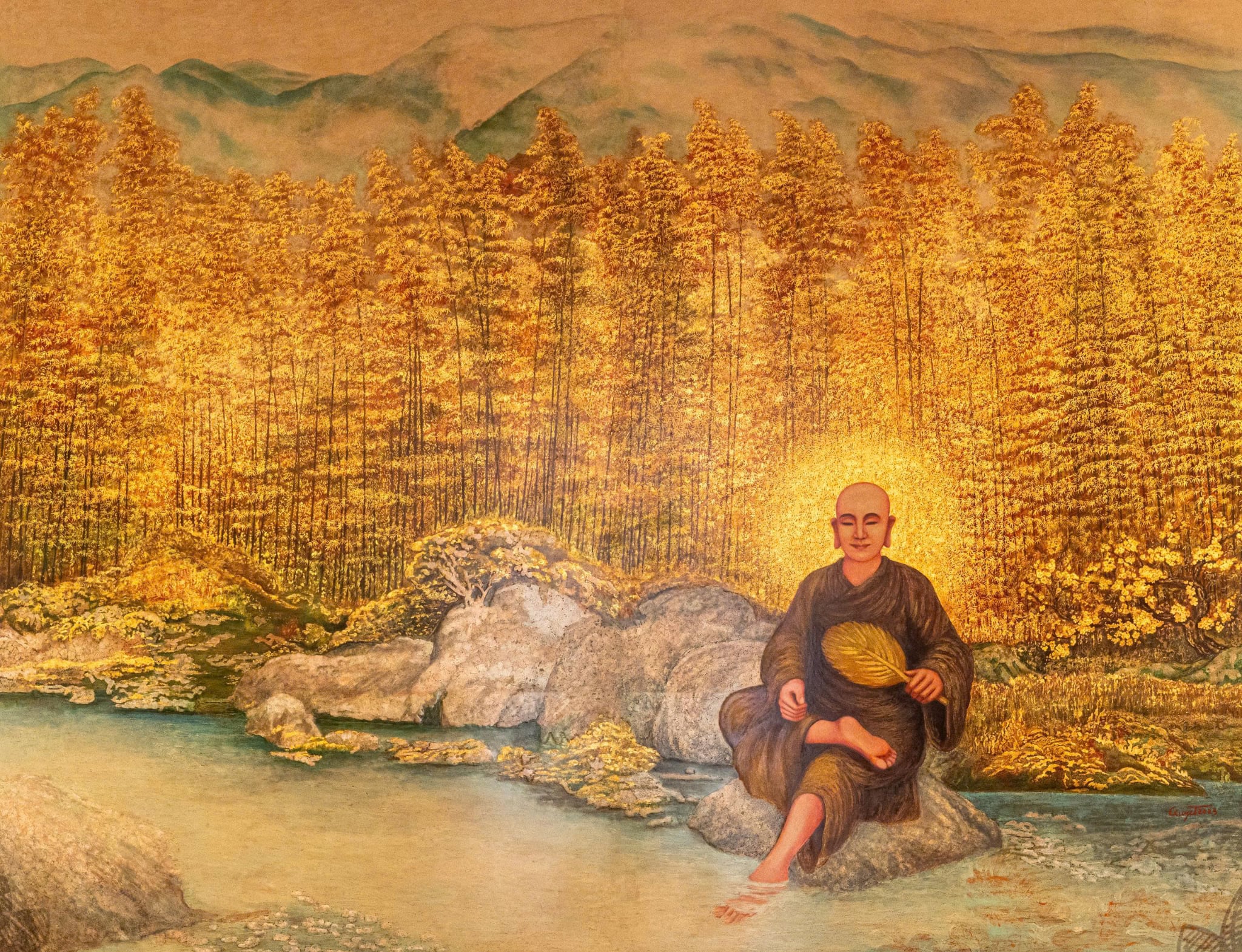
After fulfilling his responsibility to the country, in the Quy Ty year (1293), He yielded the throne to his son Tran Anh Tong and became the Retired Emperor (Thai Thuong Hoang). In 1294, He entered monastic life at the Vu Lam royal retreat (now in Ninh Binh). In August 1299, from Thien Truong palace, He officially returned to Yen Tu for ascetic practice, taking the title Huong Van Dai Dau Da (The Great Ascetic of Fragrant Clouds), founding the Truc Lam Yen Tu Zen Sect.
It must be emphasized that He did not abandon his responsibility to ascend the mountain. Tran Nhan Tong renounced the throne for the ideal of building a Vietnamese Buddhism as the national religion, laying the foundation for Dai Viet's culture.
As He once said to His son Tran Anh Tong amidst the lush green mountains: "I did not come up here to shun the world, but even up here, my heart remains directed toward the heart of the nation."
The Final Days at Ngoa Van According to Official History
This is a fact recorded very clearly and reliably by historical documents.
In the First Month of 1308, after transmitting the position of Patriarch of Truc Lam Buddhism to Venerable Phap Loa, He officially returned to Ngoa Van Hermitage. From then on, He stayed quietly, specializing in meditation and ascetic practice at Ngoa Van Hermitage.
According to the Complete Annals of Dai Viet as well as the Record of the Three Patriarchs: at the Rat hour (midnight), on the 1st day of the 11th month in 1308, the Buddhist Emperor officially entered Nirvana at Ngoa Van Hermitage. Bao Sat cremated Dieu Ngu right at Ngoa Van Hermitage. Phap Loa arrived to sprinkle fragrant water on the pyre, collecting the jade bones and sarira.
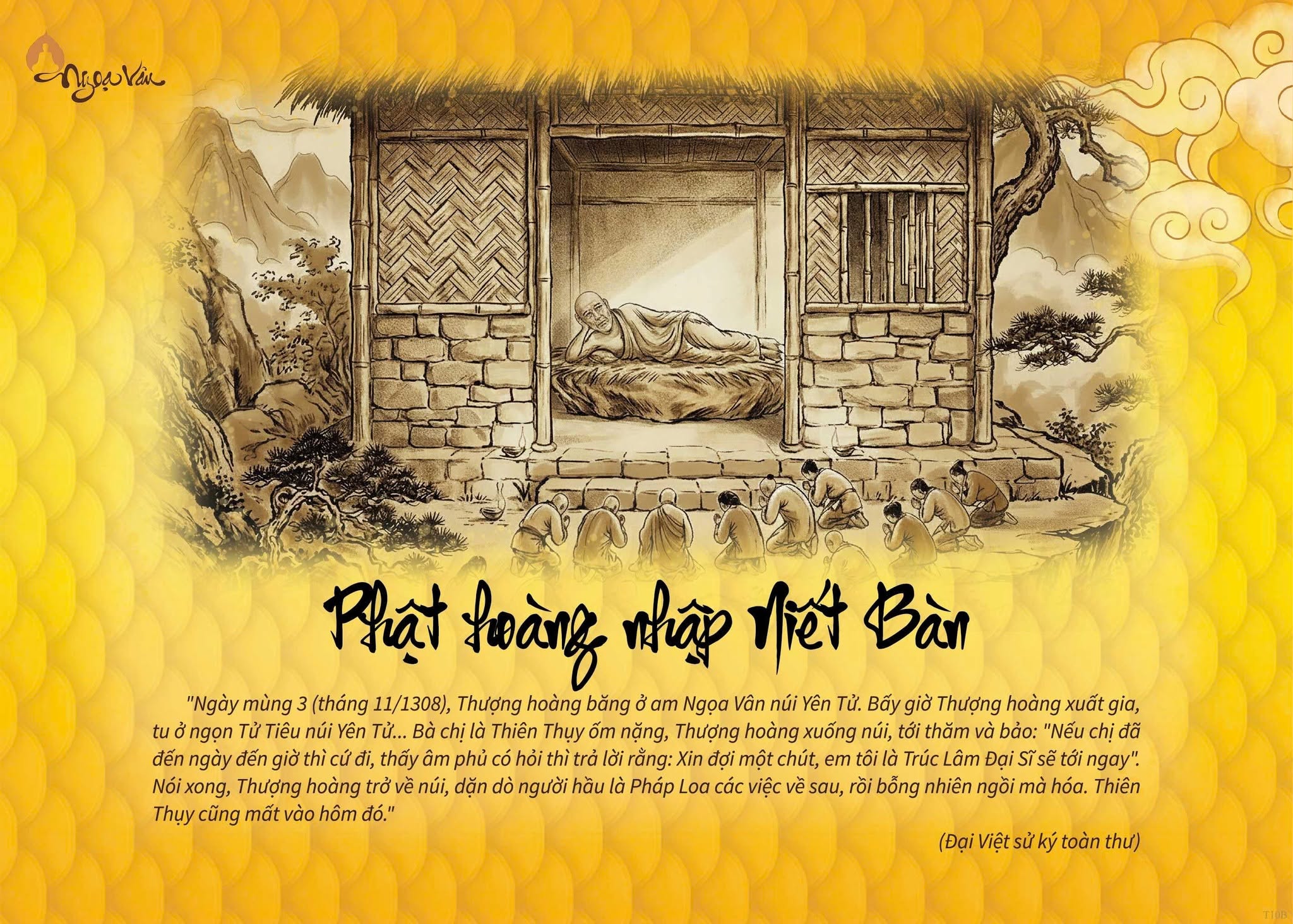
A portion of the sarira was kept at Ngoa Van, the rest and the jade bones were brought back to the capital Thang Long. At Ngoa Van, Phap Loa ordered the construction of the Buddhist Emperor Stupa to enshrine a portion of His sarira.
Thus, historical records clearly determine: Ngoa Van is the concluding point of the ascetic journey and the place of Nirvana for Buddhist Emperor Tran Nhan Tong not Yen Tu (Uong Bi), but Ngoa Van Hermitage on Bao Dai mountain, Dong Trieu.
This is the reason why according to Buddhist tradition, the commemoration ceremony at Ngoa Van Hermitage is always held one day before Yen Tu following the "first foremost" tradition of Eastern people, as the place where He attained Buddhahood is considered the most sacred.
From a Small Hermitage to a Sanctuary The 700-Year Journey
After Buddhist Emperor Tran Nhan Tong attained Buddhahood, King Tran Anh Tong and Phap Loa expanded Ngoa Van into a vast complex of pagodas and stupas. Historian Phan Huy Chu in the Categorized Records of the Institutions of Successive Dynasties (Lich trieu hien chuong loai chi) once remarked that King Tran Anh Tong "exhausted the people's labor at Ngoa Van hermitage" which shows that the scale of construction here was very massive.
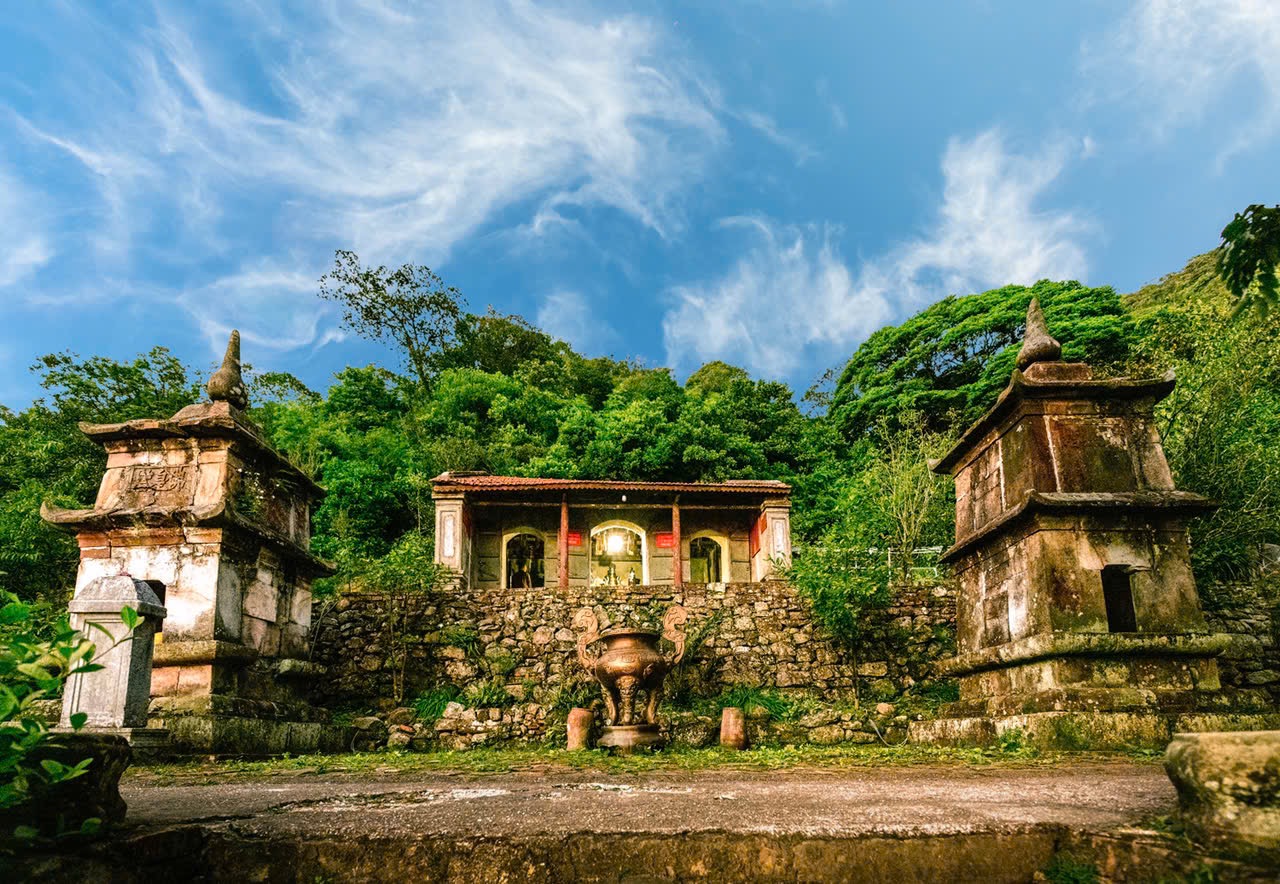
Archaeological excavations have identified 15 relic sites with traces of pagoda, hermitage, and stupa architecture from the Tran Dynasty to the early 20th century. Among them:
- 10/15 sites have traces of the Tran Dynasty
- 14/15 sites have traces of the Le Dynasty (mainly the Restored Le period)
- The central area is the Hermitage and the Buddhist Emperor Stupa on Ngoa Van peak
In its role as the sanctuary of Truc Lam Yen Tu, Ngoa Van became the new center of Buddhism during the Tran Dynasty. Along with the development of Ngoa Van, in 1317 Phap Loa ordered the construction of Quynh Lam into the largest monastic training center of the Truc Lam Zen Sect turning An Sinh (renamed Dong Trieu in the reign of Tran Du Tong) into the "capital" of Dai Viet Buddhism during the Tran Dynasty.
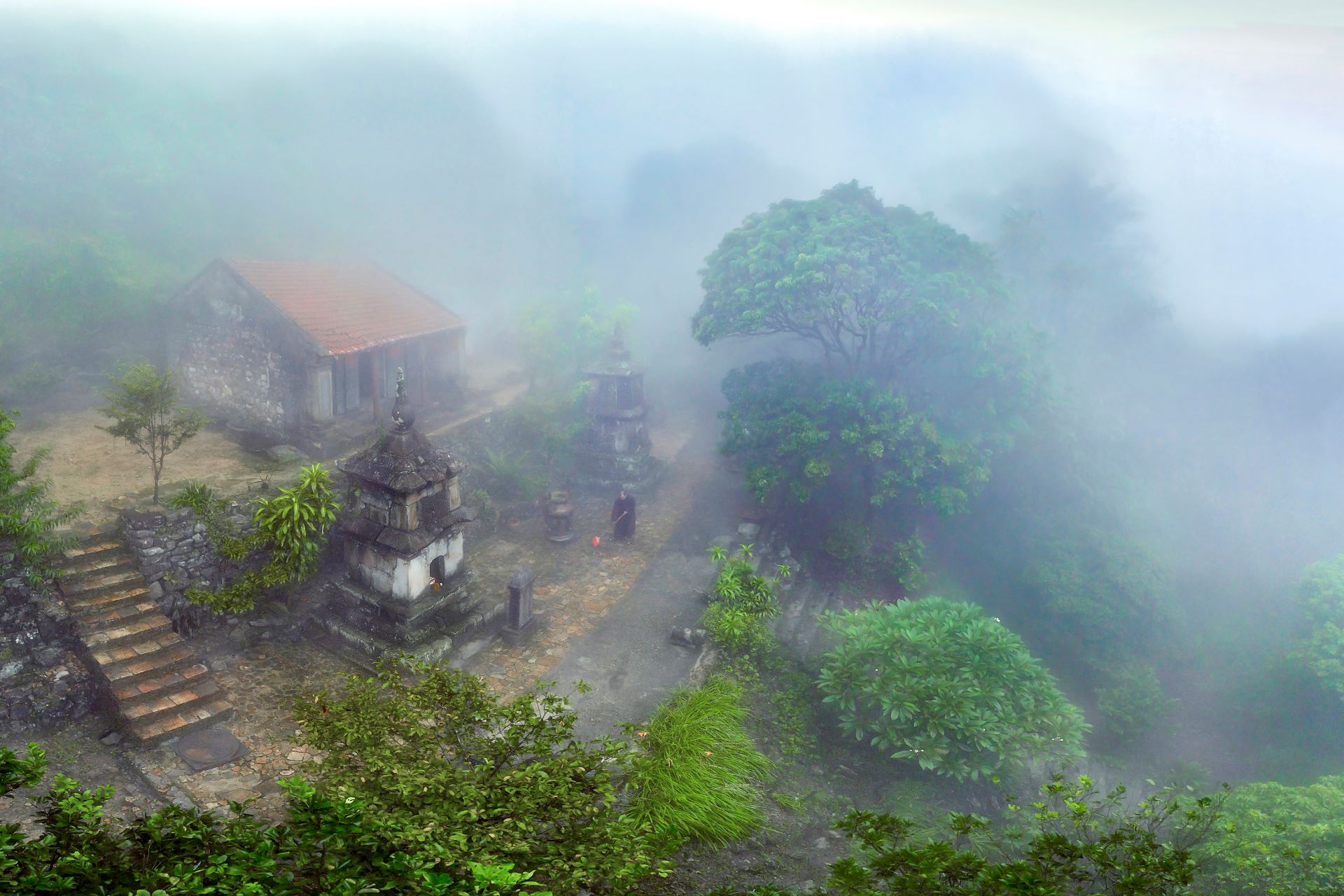
Today, Ngoa Van is one of the 14 important relic sites within the Tran Dynasty Relic Complex in Dong Trieu, ranked as a Special National Historical Relic by the Prime Minister (Decision No. 2383/QD-TTg dated Dec 09, 2013). At the same time, the Complex of Yen Tu - Vinh Nghiem - Con Son, Kiep Bac (including Ngoa Van) is currently nominated as a UNESCO World Heritage Site.
What Ngoa Van Tells Us Today
There is a question that MA. Nguyen Van Anh (Vietnam National University, Hanoi) who has spent over 10 years conducting archaeological research at Ngoa Van raised and believes still needs further clarification:
Why is Ngoa Van the concluding point of the ascetic journey to Buddhahood of Buddhist Emperor Tran Nhan Tong and not Yen Tu? What did the Buddhist Emperor's behavior want to tell us? Clearly understanding this issue will certainly give us a fuller understanding of His thought, character, and stature.
This is a question that researchers are still seeking the answer to. But perhaps there is a simpler hint that the very name Ngoa Van speaks of: the one who once carried the responsibility of a whole country on his shoulders, who twice led the army and people to defeat the Mongol invaders ultimately chose a place to lie in the clouds.
Not out of fear. Not out of fatigue. But because after all the burdens of the secular world, He knew clearly: there is something lighter than everything else and that is what He found on the peak of Ngoa Van.
"Living in the world, joyful in the Way, let things take their natural course. When hungry, eat; when tired, sleep. The treasure is already in the house, stop searching outside. Facing the world with an unattached mind, ask not about Zen."
Buddhist Emperor Tran Nhan Tong
Over 700 years later, this poem still echoes on the mountain peak covered in clouds year-round sending a message to anyone with the predestined affinity to ascend and listen.
Coming to Ngoa Van Touching the Sanctuary With Your Own Feet
Ngoa Van Zen Village is located in the Trai Loc area, An Sinh Ward, Quang Ninh province over a 2-hour drive from Hanoi. The 52-cabin cable car system brings visitors from the mountain foot to Ngoa Van Hermitage, Upper Ngoa Van Pagoda, and the Buddhist Emperor Stupa places officially confirmed by history as witnesses to the moment the Buddhist Emperor entered Nirvana over 700 years ago.
According to Buddhist sutras, venerating and bowing at the sacred relics where a Buddha attained enlightenment and Buddhahood will bring immeasurable and boundless merit. Making a pilgrimage to Ngoa Van is not only a spiritual experience but also contributes to preserving and promoting the national cultural identity in modern life.

 Ngày
31/07/2026
Ngày
31/07/2026


